

220.7K
Downloads
400
Episodes
Weekly conversations about the Liberal Arts and The Great Books with Wyoming Catholic College professors, board members,and guests.
Episodes
Dec 17, 2019
Dec 17, 2019
14 min
In his book The Abolition of Man Lewis argued that the practical result of making all moral judgments subjective—“I feel” rather than “I think”—“must be the destruction of the society which accepts it.”
Lewis saw in 1943—and we, seventy-five years later, certainly see—the ravages of such subjectivity. And that’s one of the reasons we’ve chosen The Abolition of Man as our Wyoming Catholic College book of the year.
But there’s a catch, wrote Lewis. Radical subjectivity while easy to preach is for the most part impossible. When people claim to reject the objective, what Lewis called the Tao—Natural Law or traditional morality—they are nonetheless forced to operate by smuggling shreds of the Tao back into their thinking.
To help us to understand the second lecture in The Abolition of Man, a lecture Lewis entitled “The Way,” we’re joined by author and scholar Joseph Pearce. Mr. Pearce is Director of Book Publishing at the Augustine Institute, editor of the St. Austin Review, editor of Faith & Culture, and series editor of the Ignatius Critical Editions. In addition he is a member of Wyoming Catholic College’s Catholic Scholars Advisory Board.
Dec 10, 2019
Dec 10, 2019
16 min
At some point in the early 1940s, scholar and author C. S. Lewis received a review copy of a textbook for “boys and girls in the upper forms of school,” that is, high schoolers. And while he was grateful to the authors for sending the book, “At the same time,” he wrote, “I shall have nothing good to say of them.”
Lewis tells the story of the textbook in the first of three lectures he delivered in 1943 and then published as the book The Abolition of Man. Now seventy-fifth anniversary, Wyoming Catholic College has chosen The Abolition of Man as our book of the year. This is the first in a series of three podcasts about the book.
This week we will consider the first lecture that Lewis gave the provocative title, “Men Without Chests.” In it he focused on the radical subjectivity regarding morality that he saw all around him and the enormous damage it does and would continue to do to the human person.
To tell us about “Men Without Chests,” our guest this week is Wyoming Catholic College moral theologian, Dr. Kent Lasnoski.
Dec 3, 2019
Dec 3, 2019
15 min
“The coming of God’s Son to earth,” says the Catechism of the Catholic Church (522), “is an event of such immensity that God willed to prepare for it over centuries. He makes everything converge on Christ: all the rituals and sacrifices, figures and symbols of the 'First Covenant'. He announces him through the mouths of the prophets who succeeded one another in Israel. Moreover, he awakens in the hearts of the pagans a dim expectation of this coming.”
As the world around us accelerates into the Christmas holiday season immediately after Thanksgiving—Santa figuring prominently at the end of the Macy’s Thanksgiving Day Parade in New York City—we Christians wait. And waiting is precisely the theme of Advent, the four weeks preceding Christmas Day and the twelve days of the Christmas season.
As we move into Advent, Fr. Paul Ward, one of our two chaplains at Wyoming Catholic College, answers some questions about Advent and preparing for Christmas.
Nov 26, 2019
Nov 26, 2019
13 min
St. Paul wrote to the Christians in Ephesus, “always and for everything giving thanks in the name of our Lord Jesus Christ to God the Father.” And it is, you know, more of a commandment than a suggestion. As Catholics giving thanks is a daily obligation. “No duty is more urgent,” said St. Ambrose, “than that of returning thanks.” The Holy Mass itself is the Eucharist, a word taken from the Greek word εὐχαριστία, thanksgiving.
Having said that about daily thanks, it is good and wise to set aside specific days or seasons to give thanks. The blessings we enjoy day-to-day as Americans are unprecedented in history. And yet so often, rather than reflecting gratitude back to God, we quietly think, “So what have you done for me lately?”
This week of Thanksgiving, Wyoming Catholic College President, Dr. Glenn Arbery reflects a bit about gratitude in the spiritual life, the life of Wyoming Catholic College, and in literature.
Nov 19, 2019
Nov 19, 2019
11 min
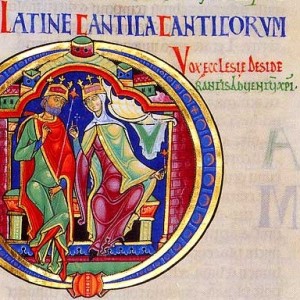
“Adiuro vos, filiae Ierusalem, per capreas cervasque camporum,
ne suscitetis neque evigilare faciatis dilectam, quoadusque ipsa velit.”
The quote is from the Latin text of the Song of Songs in the Old Testament. “I adjure you, O daughters of Jerusalem, by the gazelles or the hinds of the field, that you stir not up nor awaken love until it please.” (Song 2:7)
That biblical book in Latin is the subject of one of four Latin reading groups here at Wyoming Catholic. Juniors and seniors hone the Latin skills they learned as freshmen and sophomores. The best way to retain and grow language skills is, of course, to use them.
The group working way through Canticum Canticorum ably led by Dr. Michael Bolin, our guest for this After Dinner Scholar.
Nov 5, 2019
Nov 5, 2019
12 min
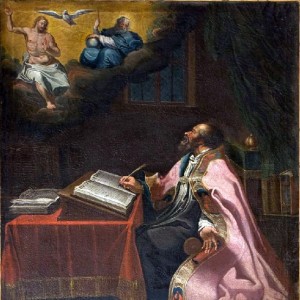
In his newest book, The Irony of Modern Catholic History, George Weigel argues that in our secular and increasingly non-rational culture, the Catholic intellectual tradition could save the mind of the West. Similarly in a new book-in-progress, Wyoming Catholic College’s Dr. Jason Baxter argues that in our disenchanted and materialistic culture, Catholic mysticism could save the spirit of the West.
Dr. Baxter’s new book is about mysticism and about what we can learn about prayer from the Church Fathers. A few weeks ago, he shared his initial chapter with our faculty.
In that chapter, Dr. Baxter starts by noting that beginning in the early twentieth century, “for the first time in human history, it was possible to spend your whole life not just without encountering God, but without knowing you were supposed to.”
The question is: Where do we go from there?
Oct 29, 2019
Oct 29, 2019
16 min
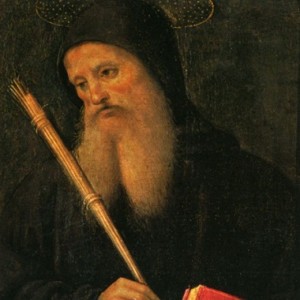
“Listen, my son, to your master's precepts, and incline the ear of your heart. Receive willingly and carry out effectively your loving father's advice, that by the labor of obedience you may return to Him from Whom you had departed by the sloth of disobedience.”
Those words are from the beginning of St. Benedict's Rule for Monasteries, the topic of this fall's all-school seminar here at Wyoming Catholic College. On October 24, the entire school community gathered for Mass followed by a Benedictine-style lunch--eating in silence as we listened to a reading about the Benedictines from St. John Henry Newman. After lunch we chanted the office and listened to some introductory remarks about the Rule before breaking up into seminar groups led by our seniors. A festive dinner followed.
Prof. Kyle Washut, our Academic Dean, was the creative force behind the day and is our guest this week on The After Dinner Scholar.
Oct 22, 2019
Oct 22, 2019
12 min
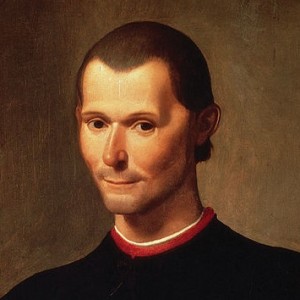
“Because life is brief…let us follow our desires” has a rather contemporary ring to it. Yet those words were penned in 1512 by the playwright, philosopher, and politico Niccolò Machiavelli in his play La Mandragola, The Mandrake.
Machiavelli is, of course, best known for his book The Prince that gives advice on how to rule. That book contains observations such as, “All ethical and moral values are arbitrary artifacts from the cultures that set them forth. All political and military greatness is derived from ignoring them.”
La Mandragola is, in a sense that kind of thinking turned into a play and Dr. Kent Lasnoski, our guest this week, has been teaching that play to our students with amazing results.

Oct 15, 2019
Oct 15, 2019
12 min
While walking our dog, Maggie, near the Popo Agie River on a frigid day last winter, I noticed a tiny, slate-grey bird standing on the ice next to open water. As I watched, the bird, an American dipper, dove into the water and disappeared. A little while later, it popped out of the river and back to its spot on the ice. I was transfixed with wonder.
Maggie and I have also seen kingfishers, American kestrels, lots of mule deer, various kinds of snakes, ruffed grouse, and, to my shock, a badger in our backyard. Add to the animals, all the plants and flowers, the geology, the weather, the night sky and we can’t help say with Psalm 104, “O Lord, how manifold are your works! In wisdom you have made them all; the earth is full of your creatures.”
Wyoming Catholic College students study God’s Creation as part of our math and science curriculum under the watchful eye of Dr. Sam Shepherd. Dr. Shepherd and his family moved from Ireland this summer to join our faculty. He is our guest this week on The After Dinner Scholar.
Oct 8, 2019
Oct 8, 2019
15 min
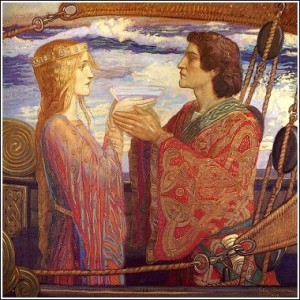
The prioress in Geoffrey Chaucer’s Canterbury Tales is something less than a humble holy woman. She lives a comfortable even luxurious lifestyle. She values her lap dogs above most people. The rosary she carries is made with precious stones and she wears a golden brooch on which is engraved “Amor Vincit Omnia,” “Love conquers all.”
The romantic notion the “Love conquers all” is hardly a relic of the past. To judge by many modern movies,TV shows, popular songs, and books, we still dream of being overcome by the power of love and swept into a happily-ever-after.
And that idea has been around for at least 1,000 years beginning with the medieval romances.
Dr. Tiffany Schubert recently led a faculty symposium about Medieval romances here at Wyoming Catholic College. Dr. Schubert is our guest this week on The After Dinner Scholar.