

220.7K
Downloads
400
Episodes
Weekly conversations about the Liberal Arts and The Great Books with Wyoming Catholic College professors, board members,and guests.
Episodes
Oct 1, 2019
Oct 1, 2019
17 min
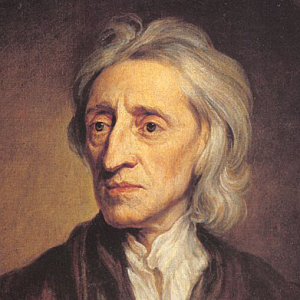
“Ready, fire, aim,” we tell our children,” is no way to live.” Careful thought comes first whether you’re hunting, choosing a college, building a birdhouse, or writing a constitution for a new republic.
What kind of government will allow human beings the greatest freedom to flourish? To answer that question, we first need to ask about the nature of human beings and second we need to ask about the nature of freedom.
And while the answers to those questions may seem obvious, they are far from it. They require careful questioning and reasoning.
The American founders lived in an age where questions about what it means to be human and about the definition of freedom were hotly debated and nowhere more so than by Thomas Hobbes and John Locke.
At Wyoming Catholic Colleges’ Constitution Day assembly, political philosopher Dr. Pavlos Papadopoulos discussed Hobbes and Locke, their similarities, differences, and the way each influenced the American founding.
Sep 24, 2019
Sep 24, 2019
14 min
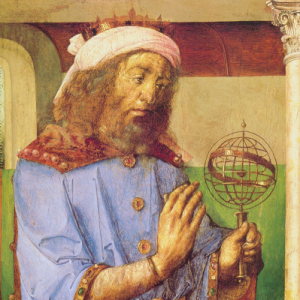
“Everybody knows,” said the US senator at a Senate hearing I attended, “that before Columbus everybody was sure that the world was flat.”
Regardless of what the senator believes, you’d have to go back a long, long, long time before Columbus to find people who believed the world was flat. In fact, back in about 240 BC not only was it well known that the earth was a ball, but they had managed to calculate its circumference.
And by AD 150, Claudius Ptolemy created his geocentric model of the universe, a model that held sway for 1,500 years until Nicolaus Copernicus and others placed the sun rather than the earth at the center of things.
In that 1,200 years Ptolemy’s treatise, Almagest, was copied over and over. In addition, scholars wrote numerous commentaries on the work.
All of which fascinates Wyoming Catholic College’s Dr. Henry Zepeda who has a particular interested in the way medieval scholars understood the mathematical sciences that they inherited from the Greeks and Arabs. He has spent much of his adult life reading medieval manuscripts in libraries across the United States and Europe and spent this past summer in Kansas City immersed in medieval manuscripts.
Sep 17, 2019
Sep 17, 2019
15 min
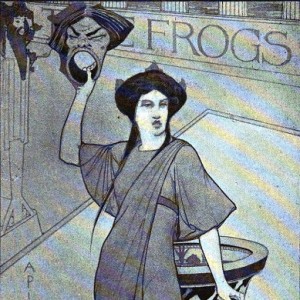
Athens had been at war more or less continually since 431 BC and the people on all sides were sick of it. So it may be of no surprise that in 405 BC at the Lenaia, Athens’ annual theater festival, first prize went to a comedy: Aristophanes’ “The Frogs.”
“The Frogs” comes to the modern reader as something as a surprise. The ancient play seems to have strong notes of the Shakespearean comedies, of Oscar Wilde, and of Monty Python’s Flying Circus. Which is to say, it has the feel of something that could have been written today in spite of being more than 2,400 years old.
Dr. Tiffany Schubert and Dr. Kent Lasnoski are team teaching our junior humanities course and joined me to talk about “The Frogs,” comedy, and satire beginning with the historical context in which Aristophanes wrote.
Sep 10, 2019
Sep 10, 2019
13 min
After graduating from Wyoming Catholic College in 2013, Travis Dziad completed his Masters in Theology in Austria at the International Theological Institute. Then he went into the Ph.D. in Theology at Ave Maria University.
This summer in addition to returning to Wyoming Catholic College as Teaching Fellow for Theology, Leadership, and Outdoor Education, soon-to-be-Dr. Dziad successfully defended his dissertation which was on the timely topic of the inspiration of Scripture. Prof. Dziad is our guest this week on The After Dinner Scholar.
Sep 3, 2019
Sep 3, 2019
15 min
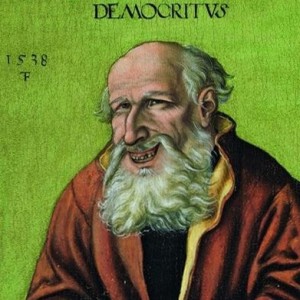
While there were too many copies of his works to make the plan practical, it is said that the great philosopher Plato wanted to gather every one of Democritus’ manuscripts into a great bonfire and thus to be rid of them forever.
While Plato did not get his wish, history has not been kind to the works of Democritus. Born in Trace around 458 BC, Democritus traveled widely in the ancient world and produced some sixty works of philosophy and science. But all we have left is fragments.
Yet to a modern reader, those fragments are intriguing in large measure because they sound so modern beginning with his view of the physical world: “Nothing exists except atoms and empty space; everything else is optional.”
Wyoming Catholic College philosopher, Dr. Michael Bolin recently taught Democritus and is our guest on this edition of The After Dinner Scholar.

Aug 27, 2019
Aug 27, 2019
12 min
“The beginning is the most important part of the work,” wrote Plato in The Republic and we at Wyoming Catholic College have begun.
This past Saturday our Wyoming Catholic College freshmen emerged from the wilderness after twenty-one days backpacking. Then on Sunday as part of our eighteenth convocation and matriculation ceremonies, each freshman signed the leather-bound student register book. Our faculty took their annual oath of fidelity to the teachings of the Catholic Church. Our bishop, Stephen Biegler was with us to celebrate Mass. And classes started today, Tuesday August 27.
We are, it seems, beginning the 2019-20 school year well.
Presiding over the weekend’s events and over the college as a whole is president Dr. Glenn Arbery, our guest on this After Dinner Scholar.
Aug 20, 2019
Aug 20, 2019
15 min
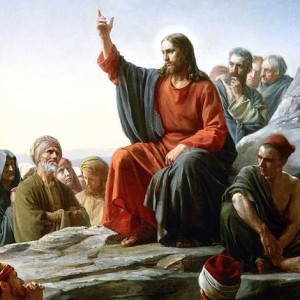
And Jesus said, “You have heard that it was said to the men of old, ‘You shall not kill; and whoever kills shall be liable to judgment.’ But I say to you that everyone who is angry with his brother shall be liable to judgment; whoever insults his brother shall be liable to the council, and whoever says, ‘You fool!’ shall be liable to the hell of fire.”
Those of us who have brothers or sisters or spouses can take little comfort from those words of Jesus. With those close to us getting angry, hurling insults, and yelling “You fool!” (or more likely “You idiot!” which expresses the Greek better) comes as second nature.
In fact, if we’re honest, the entire Sermon on the Mount (Matthew chapters 5 to 7) stands as an enormous challenge to the way we do most things most of the time.
This summer at PEAK, Wyoming Catholic College’s high school program, theologian Dr. Jeremy Holmes taught the Sermon on the Mount.
Aug 13, 2019
Aug 13, 2019
16 min
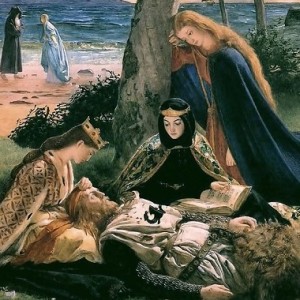
To judge by the piles of books, reels of movie film, games, prequels, and sequels, it’s safe to say that the stories of Camelot, the Round Table, and King Arthur hold a special place in our imaginations.
The stories surrounding Arthur have it all: love and romance; marriage and adultery; noble and good deeds, dishonorable and evil deeds; friendship and betrayal; lively feasts and deadly battles; magical swords and malicious witchcraft; heroes and villains; valiant, true, and brave knights and vile scoundrels. Camelot! It all started so well and ended so badly.
This summer, high school students attending Wyoming Catholic College’s two-week long PEAK program studied the Arthurian stories with this week's guest, Dr. Tiffany Schubert.
Aug 6, 2019
Aug 6, 2019
43 min
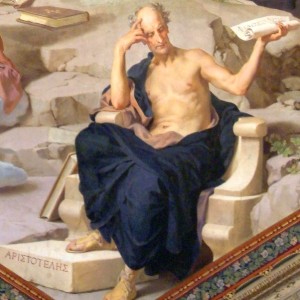
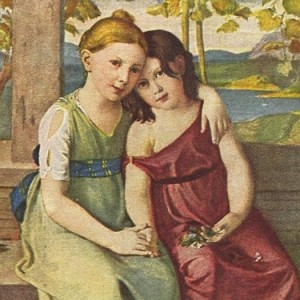
How important are friends? Aristotle observed that no one would choose to live without friends even if he or she had all the other good things of life.
Aristotle also observed that there are different kinds of friendship and that no all friendships are what he called “complete friendships.” Some are friendships of utility—business partners, vendors, baristas. Others are friendships of pleasure—fishing buddies, tennis partners, or even lovers. Not that all such friendships are necessarily bad, but that all are incomplete.
This is the last of our summer podcast series from the 2019 Wyoming School of Catholic Thought where we considered “No Greater Gift: Friendship from The Iliad to Facebook.” In it Dr. Pavlos Papadopoulos led us through Aristotle’s discussion of friendship in The Nicomachean Ethics books 8 and 9.
Jul 30, 2019
Jul 30, 2019
23 min
“I am distressed for you, my brother Jonathan;” lamented King David, “very pleasant have you been to me; your love to me was wonderful, passing the love of women.” (2 Samuel 1:26)
Understanding the kind of friendship that existed between David and Jonathan is difficult in our culture. In large measure this is because we tend to believe that the height of love is romantic love. The notion that Jonathan’s love to David passed the love of women thus sounds at least suspect.
But the idea that romantic love is the greatest love was not part of the culture of ancient Israel. It was not part of the culture of ancient Greece—the world of Achilles and Patroklos. It was not part of the culture of Europe until… well, Dr. Tiffany Schubert can explain. At the 2019 Wyoming School of Catholic Thought, Dr. Schubert began her discussion of the poetry of friendship by describing how the exaltation of the romantic through the poetic tradition has become a detriment to us as we try to form deep, committed friendships.