

220.7K
Downloads
400
Episodes
Weekly conversations about the Liberal Arts and The Great Books with Wyoming Catholic College professors, board members,and guests.
Episodes
Jul 23, 2019
Jul 23, 2019
43 min
“On an exceptionally hot evening early in July a young man came out of the garret in which he lodged in S. Place and walked slowly, as though in hesitation, towards K. bridge.
“He had successfully avoided meeting his landlady on the staircase. His garret was under the roof of a high, five-storied house and was more like a cupboard than a room. The landlady who provided him with garret, dinners, and attendance, lived on the floor below, and every time he went out he was obliged to pass her kitchen, the door of which invariably stood open. And each time he passed, the young man had a sick, frightened feeling, which made him scowl and feel ashamed. He was hopelessly in debt to his landlady, and was afraid of meeting her.”
Thus begins Fyodor Dostoyevsky’s novel Crime and Punishment. "He" in this case is Rodion Romanovich Raskolnikov, a college drop-out living in abject poverty in 19th century St. Petersburg, Russia. Consumed with misery, anger, and a strange sense of self-importance, Raskolnikov will in the course of the novel commit a double murder plunging him even deeper into despair.
Along the way, he meets Sonia Marmeladov. She is the child of a hopeless drunk who, in order to support her father, his second wife, and his step-children, sells the only thing she possesses: herself in prostitution.
How the friendship between harlot and the murderer becomes the source of redemption is the topic of the novel and was the topic Dr. Virginia Arbery addressed at the 2019 Wyoming School of Catholic Thought. This is what she had to say.
Jul 16, 2019
Jul 16, 2019
55 min
“There is nothing on this earth more to be prized than true friendship,” wrote St. Thomas Aquinas. In fact, he went on, “Friendship is the source of the greatest pleasures, and without friends even the most agreeable pursuits become tedious.”
Jesus made it clear that while the first and greatest commandment is to love God, the second is love for neighbor. And “neighbor” for Jesus even extends to enemies.
In the second part of the second part of the Summa Theologiae, St. Thomas Aquinas explored the question of love for God, neighbors, enemies, and friends.
At The Wyoming School of Catholic Thought, theologian Dr. Jeremy Holmes led us through Thomas’ thinking. Here, in part, is what he said.
Texts from St. Thomas Aquinas:
- Summa Theologae II.II, Question 23, Article 1; Question 25, Article 1; Question 26, Article 3
- Disputed Questions on the Virtues, Question 2, Article 2
Jul 9, 2019
Jul 9, 2019
26 min
When we think of politics, for most of us the word “friendship” is not the first thing that comes into our minds. Our politics are rancorous, ugly, polarized, and just about everything else politics is not supposed to be.
In spite of the rancorous, ugly, polarized politics of Ancient Athens, Aristotle suggested that what holds cities that is, the root of politics is friendship.
At June’s Wyoming School of Catholic Thought, Dr. Virginia Arbery looked at friendship and politics using The Politics by Aristotle. Here is some of what she had to say.

Jul 2, 2019
Jul 2, 2019
1hr 3 min
“‘My dear Jane,’ exclaimed Elizabeth, ‘you are too good. Your sweetness and disinterestedness are really angelic; I do not know what to say to you. I feel as if I had never done you justice, or loved you as you deserve.’”
“Miss Bennet eagerly disclaimed all extraordinary merit, and threw back the praise on her sister’s warm affection.”
One of the exemplary friendships we studied at this year’s Wyoming School of Catholic Thought was the friendship between Elizabeth Bennet and her sister Jane in Jane Austen’s Pride and Prejudice.
What characterized this friendship between women? Why is their relationship so appealing? And what can we learn from it to inform our own friendships.
Wyoming Catholic College Teaching Fellow Dr. Tiffany Schubert has been a Jane Austen fan and scholar for many years. Here is her presentation delivered this past June 10.
Jun 25, 2019
Jun 25, 2019
50 min
When we came up with the theme for this year’s Wyoming School of Catholic Thought—“No Greater Gift: Friendship from The Iliad to Facebook”—we knew that we wanted Wyoming Catholic College president Dr. Glenn Arbery to discuss the friendship between Achilleus and Patrokolos in Homer’s epic.
What no one expected was that Dr. Arbery would pair the friendship between Achilleus and Patrokolos with the friendship Herman Melville described in Moby Dick, the strange friendship between Ishmael and Queequeg.
Here are Dr. Arbery’s comments.
Jun 18, 2019
Jun 18, 2019
31 min
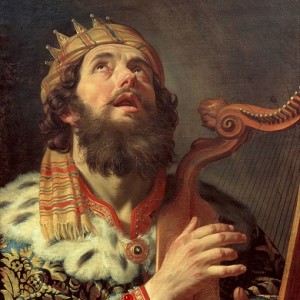
Jonathan was Crown Prince of Israel, the man next in line to be king. David was, however, the man destined to be king instead--and that by God's sovereign choice. King Saul knew that God had chosen David and Jonathan knew as well. Yet rather than trying to kill David, "Jonathan loved him as his own soul." The two were the dearest of friends.
This lecture by Dr. Jim Tonkowich about the friendship between Jonathan and David opened the 2019 Wyoming School of Catholic Thought on June 9. The school's theme was: "No Greater Gift: Friendship from The Iliad to Facebook."
This podcast is the first in a series of podcasts this summer featuring lectures from the Wyoming School.

Jun 11, 2019
Jun 11, 2019
12 min
Memorial Day has come and gone and with school terms ending, it’s time for vacation. Ah, to get away and… and what? Run from cathedral to museum to monument to scenic vista? Deal with airports, TSA, rental cars, and driving? Work on your golf game? Rise up early to fish? Sit in the beach? Hike in the mountains? Read? Do nothing? Try hard to avoid the all too common lament that I’ve returned from vacation only to find I need a vacation?
What’s the point of vacations anyway? Is taking a vacation the same as leisure? If not, what is leisure?
Philosophers take vacations the same as the rest of us and Wyoming Catholic College Associate Professor of Philosophy, Dr. Michael Bolin just returned from a family vacation. Dr. Bolin is our guest on this edition of The After Dinner Scholar.

Jun 4, 2019
Jun 4, 2019
15 min
The late actor Sir Alec Guinness once commented, “All creative people hate mathematics. It is the most uncreative subject you can study.”
By contrast, the German mathematician, Hermann Weyl asserted just the opposite, “Besides language and music, mathematics is one of the primary manifestations of the free creative power of the human mind.”
So which is it? Is mathematics “the most uncreative subject you can study” or “one of the primary manifestations of the creative power of the human mind”?
Wyoming Catholic College professor, mathematician Dr. Scott Olsson—well, he is after all a mathematician so you can guess what he might think. The question is, if you’re a skeptic who has never particularly liked math, can he convince you—the way he has convinced many students over the years.
May 28, 2019
May 28, 2019
16 min
Most Catholics know only the Roman or Latin Novus Ordo rite of the Eucharist. That’s not a surprise since it’s that rite that is celebrated almost exclusively in most of our churches. But the Catholic Church has not one, not two, but twenty-three different rites falling into six basic families: Latin, Alexandrian, Antiochian, Armenian, Chaldean and Constantinopolitan better known as Byzantine.
Our Wyoming Catholic College community is no stranger to the Byzantine rite. A nearby priest has celebrated that rite, the Divine Liturgy of St. John Chrysostom, regularly. Beginning this fall, however, we will all become even more familiar with the Byzantine liturgy as the college welcomes Fr. David Anderson as a second college chaplain. Fr. Anderson is our guest this week on The After Dinner Scholar.

May 21, 2019
May 21, 2019
14 min
In 2003 while speaking to a group of lay leaders, Bishop David L. Ricken then the bishop in Wyoming expressed his desire to promote Catholic education for all ages. The might, he mused, mean academic retreats and seminars since “we don’t have a Catholic college in Wyoming yet.” The crowd immediately broke into thunderous applause. In the midst of the clapping, Bishop Ricken turned to Fr. Bob Cook and asked, “What did I say?” Fr. Cook replied, “You said, ‘Yet.’”
On Saturday, May 11, the Wyoming Catholic College Class of 2019 graduated. Bishop Ricken returned to Lander to celebrate the Baccalaureate Mass and to speak at commencement. He was also kind enough to reflect on the founding and growth of the college for The After Dinner Scholar.