
220.7K
Downloads
400
Episodes
Weekly conversations about the Liberal Arts and The Great Books with Wyoming Catholic College professors, board members,and guests.
Episodes
May 18, 2021
May 18, 2021
16 min
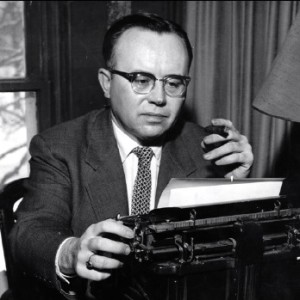
“Men cannot improve a society by setting fire to it,” wrote conservative political theorist Russell Kirk, “they must seek out its old virtues, and bring them back into the light.”
The twentieth century, in contrast with what Kirk wrote, witnessed various attempts to improve society by setting them on fire. And the twenty-first century has the nasty feel of more of the same.
Our final guest lecturer here at Wyoming Catholic College was historian Dr. Susan Hanssen from the University of Dallas. The day before her lecture, she addressed the student St. Boethius Society about Russell Kirk and the history and current state of American conservatism.
May 11, 2021
May 11, 2021
13 min
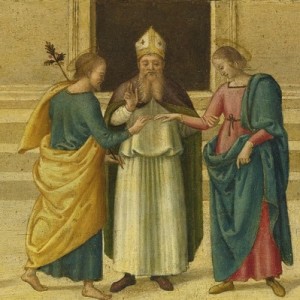
As they begin their devotional guide for married couples, 30 Days with Married Saints, Wyoming Catholic College theologian Dr. Kent Lasnoski and his wife Cait ask the reader to imagine a beatification ceremony for a married couple. The words they quote are from St. John Paul II’s homily at the beatification of Luigi and Maria Beltrame Quattrocchi, but they add, “One day, God willing, such a homily might be given for you! You may think this possibility highly unrealistic and perhaps it’s true that you and your spouse will never be officially canonized. But that doesn’t mean that you cannot become saints.”
Their book 30 Days with Married Saints is a means to that end.
I began by asking Kent and Cait what inspired them to write the book.
May 4, 2021
May 4, 2021
17 min
Quoting St. Jerome, the great fifth century Bible scholar, the Catechism of the Catholic Church (133) tells us:
The Church “forcefully and specifically exhorts all the Christian faithful. . . to learn the surpassing knowledge of Jesus Christ, by frequent reading of the divine Scriptures. Ignorance of the Scriptures is ignorance of Christ.”
Theologians throughout the life of the Church pointed out not just a connection, but a identification between Jesus Who is the Word of God made flesh and the Scriptures, the Word of God written and handed down to us.
But how does that work? What does it mean?
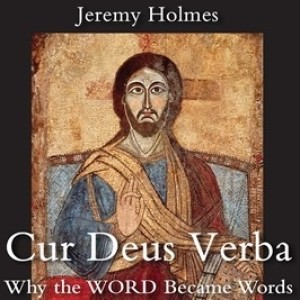
Theologian Dr. Jeremy Holmes hopes that his new book will answer that question. The title is Cur Deus Verba: Why the WORD Became Words.
To sign up for the free distance learning course "Reading Your Bible for All It's Worth," visit the Wyoming Catholic College website.
Apr 27, 2021
Apr 27, 2021
15 min
In his new book An Introduction to Christian Mysticism: Recovering the Wildness of Spiritual Life, Wyoming Catholic College professor Dr. Jason Baxter notes that today mysticism makes us more than a little nervous. It seems to have New Age and Eastern connotations. Nonetheless, he notes, “in the premodern age..., ‘mysticism’ wasn’t some bizarre, exotic, cultish, or unusual phenomenon (like it has become), stored on bookshelves dealing with paranormal occurrences; rather it was seen as the lifeblood of prayer and adoration of God in the soul.” Then he goes on, “Ignoring it would be like selling a precious family heirloom at an estate sale because you didn’t know what it was.”
In this podcast, Dr. Baxter begins by explaining what this heirloom—what mysticism is.
For more of Dr. Baxter's books, articles, and lectures go to jasonmbaxter.com
Apr 20, 2021
Apr 20, 2021
16 min
In his 1880 novel The Brothers Karamazov Fyodor Dostoevsky explores questions of good and evil, alienation and belonging, the existence of God and the nature of morality.
As scholar and author Kenneth Boa writes in his four-volume A Taste of the Classics, “The Brothers Karamazov is a remarkable work that explores the whole human range of behavior, from the depths of depravity to the heights of exultation and from the meanness of the human spirit to the great nobility of which it is capable.”
This semester, Wyoming Catholic College seniors have been reading “The Brothers K” under the capable tutelage of Prof. Adam Cooper. I asked Prof. Cooper what attracts him to the novel.

Apr 13, 2021
Apr 13, 2021
25 min
It makes no sense at first: a band of heroes,
Led by an old man with a bolo tie,
Who saved a world that was not worth saving.
There’s nothing for it then but to explain.
Perhaps for most of you it’s history,
But there’s a right way and a wrong way
To tell a story, and this on is epic.
Thus begins Fredrick Turner’s modern science fiction epic, Apocalypse. It’s the third sci-fi epic he has written and like Homer, Virgil, Milton, and Dante before him, he has written them in verse.
Dr. Turner is a poet, a cultural critic, a playwright, a philosopher of science, an interdisciplinary scholar, an aesthetician, an essayist and a translator, as well as the author of 28 books, including Natural Classicism: Essays on Literature and Science; Rebirth of Value: Meditations on Beauty, Ecology, Religion and Education; and Epic: Form, Content, and History.
Dr. Turner, now retired Professor of Literature and Creative Writing at the University of Texas Dallas, delivered a lecture here at Wyoming Catholic College. While he was in Lander, Dr. Turner was kind enough to join us for a podcast interview.
Dr. Turner's lecture can be found here.
Apr 6, 2021
Apr 6, 2021
14 min
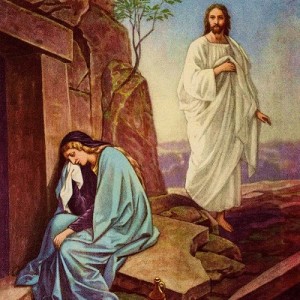
“The Resurrection of Jesus,” says the Catechism of the Catholic Church, “is the crowning truth of our faith in Christ, a faith believed and lived as the central truth by the first Christian community; handed on as fundamental by Tradition; established by the documents of the New Testament; and preached as an essential part of the Paschal mystery along with the cross.”
The resurrection is not reincarnation. It’s not reanimation. Jesus, the incarnate Son of God, second Person of the Blessed Trinity really and truly died on the cross, was buried in a borrowed tomb, and rose again from the dead.
During Holy Week, our podcast featured Dr. Jeremy Holmes discussing the Gospel of John chapter 19—the cross. During this Easter Octave, Dr. Kent Lasnoski joins us to discuss John chapter 20 and the resurrection.
Mar 30, 2021
Mar 30, 2021
18 min
Faithful cross, above all other,
One and only noble tree:
None in foliage, none in blossom,
None in fruit thy peers may be:
Sweetest wood and sweetest iron,
Sweetest weight is hung on thee.
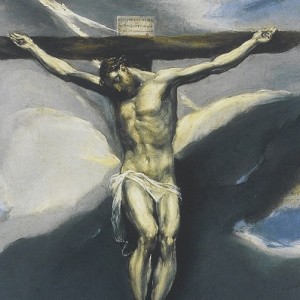
While each time we see a cross or a crucifix and every time we attend Mass we have the opportunity to ponder Christ’s great sacrifice, during Holy Week it becomes almost the exclusive focus of our attention.
Writing about Good Friday in his book Death on a Friday Afternoon, Fr. Richard John Neuhaus wrote, “This is the axis mundi, the center upon which the cosmos turns. In the derelict who cries from the cross is, or so Christians say, the Alpha and Omega, the beginning and the end. The life of all on this day died. Stay a while with that dying.”
The Gospel of John, chapter 19 tells the story of that dying. In this podcast Dr. Jeremy Holmes discusses John 19 and the death of Jesus.

Mar 23, 2021
Mar 23, 2021
16 min
St. Benedict in his Rule wrote concerning prayer, “ ‘Seven times in the day,’ says the Prophet [psalmist], ‘I have rendered praise to you.’ Now that sacred number of seven will be fulfilled by us if we perform the offices of our service at the time of the morning office, of prime, of terce, of sext, of none, of vespers and of compline, since it was of these day hours that he said, ‘Seven times in the day I have rendered praise to you.’ For as to the night office the same Prophet says, ‘In the middle of the night I arose to glorify you.’ ”
Today priests, bishops, religious, and a surprising number of lay Christians pray through the day using the Daily Office. Msgr. Daniel Seiker, Wyoming Catholic College's Latin chaplain, explains what it means to pray the office and why it's important.

Mar 16, 2021
Mar 16, 2021
15 min
Education, as the current US Department of Education website has it, is all about “student achievement and preparation for global competitiveness.”
If that's the case, then it stands to reason that education will be entirely pragmatic, teaching skills—marketable skills—and that student success will be a function of pragmatic, marketable skills.
That’s especially clear in the seemingly esoteric world of college entrance tests—the SAT and ACT. Both tests claim to measure “college and career readiness” and schools, wanting their graduates to succeed “teach to the test,” conforming their curricula to the measured practical and marketable skills measured by the tests.
Partly as a result of his Christian convictions, Jeremy Tate who ran a company that helped students prep for the SAT and ACT, became disillusioned with the whole system and started a company to compete with the two giants of college admissions testing. Mr. Tate’s Classic Learning Test (CLT) continues to gain traction and it’s the test Wyoming Catholic College is most pleased to see in admissions transcripts. Mr. Tate visited Wyoming Catholic College and was kind enough to be our guest on this podcast.