

220.7K
Downloads
400
Episodes
Weekly conversations about the Liberal Arts and The Great Books with Wyoming Catholic College professors, board members,and guests.
Episodes
Mar 9, 2021
Mar 9, 2021
18 min
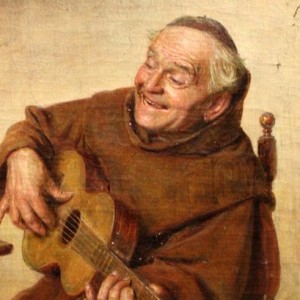
We Americans are nothing if not activists. In our homes, in our careers, in our parishes we’re the people who want to make things happen. And so it may come as a surprise to read Pope St. John Paul II’s words, “In the consecrated life the proclamation of the Gospel to the whole world finds fresh enthusiasm and power.”
In 1996, after a synod about the consecrated life, St. John Paul wrote the Apostolic Exhortation Vita Consecrata, “On the Consecrated life and its Mission in the Church and in the World.”
The consecrated life—that is, the life led by monks and nuns—“is at the very heart of the Church as a decisive element for her mission, since it ‘manifests the inner nature of the Christian calling’ and the striving of the whole Church as Bride towards union with her one Spouse.”
This past week, theologian Dr. Jeremy Holmes led our seniors through a discussion of Vita Consecrata and he is our guest on this edition of The After-Dinner Scholar.
Feb 23, 2021
Feb 23, 2021
13 min
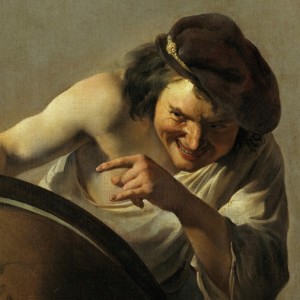
It may be hard to believe, but the Catholic Church has a patron saint of humor: Philip Neri who noted that, “A cheerful and glad spirit attains to perfection much more readily than a melancholy spirit.” And my observation is that we can become cheerful and glad people as we laugh.
Last week The After-Dinner Scholar featured Wyoming Catholic College senior, Miss Amanda Johnson, talking about her theologically rich oration about horsemanship as an aid to restoring our fallen humanity.
This week senior Kevin Milligan discusses his philosophically rich oration was entitled: “Laughing at Perfection: A Classification of Laughter and a Defense of Its Role in the Natural Perfection of Man.”
Feb 16, 2021
Feb 16, 2021
15 min
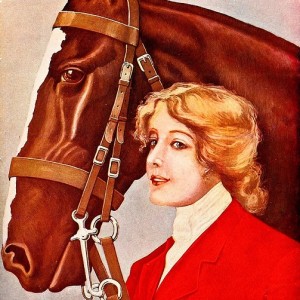
Winston Churchill once quipped, “There is something about the outside of a horse that is good for the inside of a man.” Wyoming Catholic College senior, Miss Amanda Johnson enthusiastically agrees.
Last week was senior oration week at Wyoming Catholic. As I explained last week, our seniors write a thesis in the fall and after Christmas break present some portion of their work in a half hour lecture followed by a half hour of questions from a faculty panel and from their peers.
Topics ranged from the poetry of Gerard Manley Hopkins to nostalgia in Willa Cather’s novels, from the chiastic structure of St. Augustine’s Confessions to cryptography, from hunting to horsemanship—the topic of this podcast. Our guest is Miss Amanda Johnson, one of our star horsewomen.
Feb 9, 2021
Feb 9, 2021
16 min
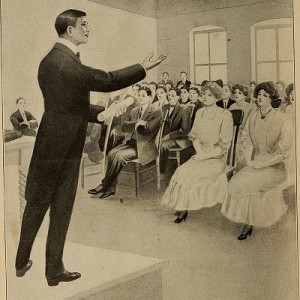
Mark Twain observed, “There are only two types of speakers in the world. 1. The nervous and 2. Liars.” I suspect that our Wyoming Catholic College seniors can relate.
In the fall semester, Wyoming Catholic College seniors write theses on topics of their choosing. This week, at the beginning of Spring semester, each senior will share his or her thesis research with the college community in a senior oration. Tuesday, Wednesday, and Thursday classes are canceled and each member of the class of 2021 will deliver a half hour lecture followed by a half hour of questions put to them by a faculty panel and by their fellow students.
Dr. Virginia Arbery teaches rhetoric, the foundation of the senior orations and she shares with us the place of rhetoric and public speaking in a Wyoming Catholic College education.
Feb 2, 2021
Feb 2, 2021
16 min
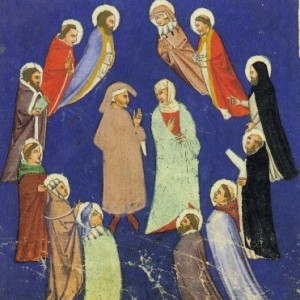
In his Divine Comedy, writes Wyoming Catholic College professor Dr. Jason Baxter, Dante “intentionally gathered creatures, places, landscapes, and practices from across the world and types of encyclopedic texts and then filled his book with their imagines; and, second, the poet consistently and insistently constructs moment in which we—along with the pilgrim—must take it all in at a glance, as if we are viewing the whole imago mundi from above.”
That quotation from Dr. Baxter comes from his new scholarly book, The Infinite Beauty of the World: Dante’s Encyclopedia and the Names of God published in time for the commemoration of Dante Alighiri’s death in 1321. And certainly anyone who has read the Commedia is well acquainted with the whirl of images and ideas contained in every Canto.
In this edition of The After-Dinner Scholar, Dr. Baxter discusses his new scholarly book as well as making Dante accessible to non-scholars.
Jan 26, 2021
Jan 26, 2021
15 min
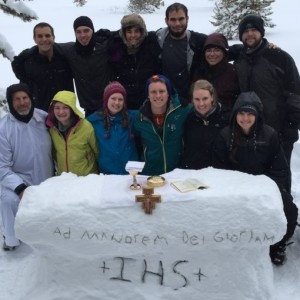
Most people, when winter sets in, are willing to go out now and again, but would rather sit by a fire with a hot beverage reading. No doubt our Wyoming Catholic College freshmen would enjoy that, but instead this week they’re camping in the shadow of the Grand Teton.
Just as our freshmen arrive early for fall semester so that they can spend three weeks backpacking, so they arrived early for spring semester head out into the wilderness—this time a cold snowy wilderness—for a week of backpacking, camping, cross-country skiing, and a day of alpine skiing.
Bob Milligan (Class of 2018) is on the staff of Wyoming Catholic College's COR Expeditions. He has been working on the freshmen winter trip logistics was kind enough to take a brief time out to tell us about the trip.
Jan 19, 2021
Jan 19, 2021
18 min
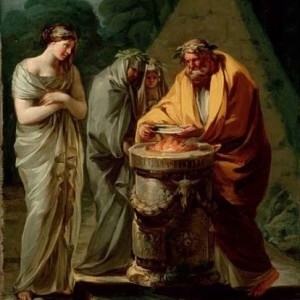
Regarding the civilizations of ancient Rome and Greece, Numa Denis Fustel de Coulanges wrote in 1864, “What we have received from them leads us to believe that we resemble them. We have some difficulty in considering them as foreign nations; it is almost always ourselves that we see in them. Hence spring many errors.”
The ancient city, writes Coulanges, was in essence a religious association. The gods of each city, the soil of each city, and the people of each city were unique. Thus the only civic conceivable was the city.
Then something changed. Or rather multiple things changed.
Dr. Pavlos Papadopoulos uses Coulanges book The Ancient City as a way of bridging how citizenship was understood in the ancient world of Plato’s Athens or Coriolanus’s Rome and how citizenship came to be understood beginning with Augustine’s City of God. Dr. Papadopoulos is our guest this week.
Jan 12, 2021
Jan 12, 2021
15 min
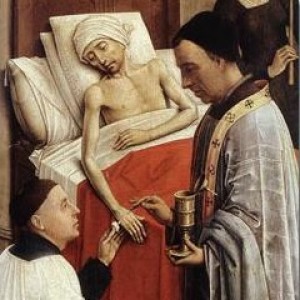
St. James wrote, “Is any among you sick? Let him call for the elders of the church, and let them pray over him, anointing him with oil in the name of the Lord; and the prayer of faith will save the sick man, and the Lord will raise him up; and if he has committed sins, he will be forgiven.” (James 5:13-15)
What with COVID, you’d expect we’d hear rather a lot about the sacrament of anointing the sick or as it has been called in the past Extreme Unction.
We in our day, however, are most likely to call our physician for an appointment or possibly the telehealth line than we are to call our priest asking to be anointed with oil. At least until doctors, hospitals, and the great pharmacopeia fail us and death seems imminent.
Is there still a place for anointing the sick?
Having recently taught about the sacraments, Dr. Kent Lasnoski has been reflecting on the meaning of anointing the sick.
Jan 5, 2021
Jan 5, 2021
16 min
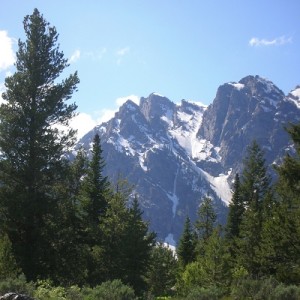
If you come to Lander, Wyoming, it’s hard not to notice the landscape: cliffs, rises, canyons, and the high peaks of the Wind River Mountain Range.
College for Wyoming Catholic College freshmen begins by studying God’s first book: The Creation. During their three-week freshman expedition they drink in the beauty, majesty, and power..
When they return from the expedition, in theology they study God’s second book: the Holy Scriptures. But in field science, it’s back to the first book as they carefully examine the flora and fauna of our region along with the rocks.
Our guest this week, Prof. Lauren Heerschap has worked for the Colorado Geological Survey, and has taught geology in Zermatt, Switzerland, Durango, Colorado. Her enthusiasm about our rocks is contagious.
Dec 29, 2020
Dec 29, 2020
13 min
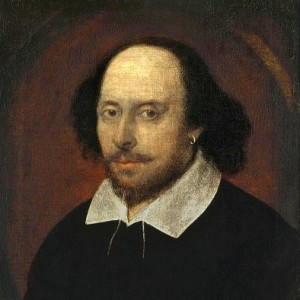
Wyoming Catholic College is pleased to announce that we will host another session of The Wyoming School of Catholic Thought. Adult learners will gather from across the country here in Lander from Sunday, June 6 to Friday, June 11 to discuss “Shakespeare’s Rome.”
We’ll dig into three of Shakespeare’s plays: “Coriolanus,” reflecting on the early years of the Roman Republic, followed by “Julius Caesar” and “Antony and Cleopatra” focusing on the end of the Republic and the beginning of the Roman Empire
What can we learn about: Rome and Shakespeare’s England? Rome and America? Rome and Christianity? Honor, eros, and that most Roman of virtues, piety? How can these plays inform our lives as individuals, as citizens, and as Catholic Christians?
This week's guest is Wyoming Catholic College president, Dr. Glenn Arbery, one of the professors at the Wyoming School.
For more information about The Wyoming School of Catholic Thought or to register visit the college website: wyomingcatholic.edu/wsct.