

220.7K
Downloads
400
Episodes
Weekly conversations about the Liberal Arts and The Great Books with Wyoming Catholic College professors, board members,and guests.
Episodes
Dec 22, 2020
Dec 22, 2020
17 min
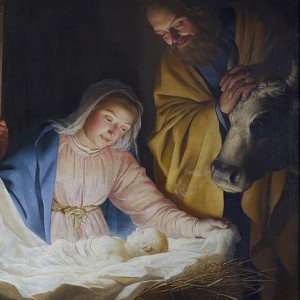
C. S. Lewis told the story of his brother's experience on a bus. As they passed a church with a creche outside, a woman remarked “Oh Lor’! They bring religion into everything. Look—they’re dragging it even into Christmas now!”
That was way back in 1959. Even then Lewis found the commercialization and secularization of Christmas revolting contrasting what he called “our feast of the Nativity” with what he referred to as “all this ghastly ‘Xmas’ racket.”
This last week before The Feast of the Nativity many are in full Xmas-rush mode: last-minute shopping, last-minute decorating, another batch of cookies or two, getting ready for family to arrive for the festivities. By Christmas Day we’ll either be slouching toward Bethlehem or we’ll arrive totally wired.
How do we avoid that? Wyoming Catholic College chaplain Fr. David Anderson reflects on his preparation and experience of Christmas.
Dec 15, 2020
Dec 15, 2020
19 min
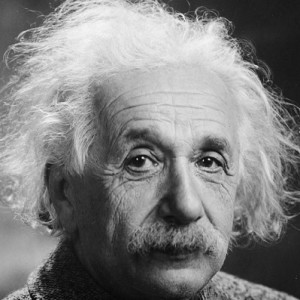
“I sometimes ask myself,” said Albert Einstein, “how it came about that I was the one to develop the theory of relativity. The reason, I think, is that a normal adult never stops to think about the problem of space and time. These are things which he has thought of as a child. But my intellectual development was retarded, as a result of which I began to wonder about space and time only when I had already grown up.”
About five weeks ago, Dr. Henry Zepeda was a guest on this podcast talking about Euclidian geometry: points, lines, planes, angles, and solids. Euclid described the world as we see it today, the way we typically consider the true way of seeing it.
In 1905, however, a young man named Albert Einstein proposed something different. Euclid, he said, hadn’t taken into consideration motion and time. Once you do that, he reasoned, geometry needs to be taken as a branch of physics.
Dr. Michael Bolin who teaches Einstein’s Special and General Theories of Relativity to Wyoming Catholic College seniors talks more about that.
Dec 8, 2020
Dec 8, 2020
15 min
While there are many novels in our era and prior to our era that have unhappy endings, novelist Jane Austen did not write any of them. Austen’s novels end, for the good characters, just as we would hope. “I am the happiest creature in the world,” writes Elizabeth Bennett about her engagement near the end of Pride and Prejudice. “Perhaps other people have said so before,” she goes on, “but not one with such justice.” How marvelous. Or is it?
Beginning on Thursday, January 14, Dr. Tiffany Schubert will be teaching a free six-week distance learning class entitled “‘This Holiday of Spirits’: Jane Austen, Courtly Love, and Happy Endings.” This podcast conversation with Dr. Schubert will give you a taste of what's to come.
Visit our website for more information on this free course and to sign up.
Dec 1, 2020
Dec 1, 2020
21 min
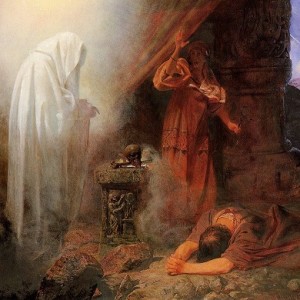
Summing up the reign of Israel’s first king, 1Chronicles 10 tells us, “So Saul died for his unfaithfulness; he was unfaithful to the Lord in that he did not keep the command of the Lord, and also consulted a medium, seeking guidance, and did not seek guidance from the Lord. Therefore the Lord slew him, and turned the kingdom over to David the son of Jesse.”
Saul did not, however, begin his reign unfaithful to the Lord. In fact, given his druthers, he probably would not have begun his reign at all. Saul started out as the reluctant king, but that didn’t last.
During the fall, Dr. Jeremy Holmes leads Wyoming Catholic College freshmen through the history of God’s People in the Old Testament. He always pauses to discuss the short, troubling reign of King Saul.
Nov 24, 2020
Nov 24, 2020
14 min
Novelist Fredrick Beuchner wrote, “In the silence of a midwinter dusk, there is a sound so faint that for all you can tell it may be only the sound of the silence itself. You hold your breath to listen. You are aware of the beating of your heart. The extraordinary thing that is about to happen is matched only by the extraordinary moment just before it happens. Advent is the name of that moment.”
As the world around us accelerates into the Christmas holiday season immediately after Thanksgiving—Santa figuring prominently at the end of the Macy’s Thanksgiving Day Parade—we Christians wait. And waiting is precisely the theme of Advent, the four weeks preceding Christmas Day and the twelve days of the Christmas season.
As we prepare for Advent, Msgr. Daniel Seiker, one of the two chaplains at Wyoming Catholic College, shared about Advent and preparing for Christmas.
Nov 17, 2020
Nov 17, 2020
17 min
“First of all, then,” St. Paul wrote in 1Timothy 2:1-4, “I urge that supplications, prayers, intercessions, and thanksgivings be made for all men, for kings and all who are in high positions, that we may lead a quiet and peaceable life, godly and respectful in every way.”
We might have expected St. Paul to tell Timothy to pray “for kings and all who are in high position, that we may lead a quiet and peaceable life, godly and respectful in every way.” But he goes beyond that, urging that thanksgivings “for kings and all who are in high position.” That seems a bit peculiar or at least unexpected given that in AD 64, when St. Paul wrote this epistle, the Roman emperor was Nero who, among other violent and perverse behavior, ruthlessly persecuted Christians. Give thanks for him?
Here at the college there have been discussions with political philosopher, Dr. Pavlos Papadopoulos about thanksgiving as a civic virtue—something incumbent on us not only as Christians, but as citizens. With our annual national celebration of Thanksgiving coming up, we continued the conversation as a podcast.
Nov 10, 2020
Nov 10, 2020
21 min
In 1959 Oxford University Press published a 200-page book containing 451 translations (half of them in English) of a single 16-line Latin poem, Ad Pyrrham or “The Ode to Pyrrha.” The poet—now nearly forgotten—was perhaps the most influential poet of all time. His name: Quintus Horatius Flaccus, known in the English-speaking world as Horace.
For 2,000 years Horace was admired as possibly the greatest poet in history. And then Latin—especially advanced Latin—became a thing of the past and few were able to read his grammatically complex works. Today, of course, poetry itself has become passé.
But at Wyoming Catholic College, Latin is a required subject and poems are read, studied, and memorized. Latinist Eugene Hamilton has been helping a group of students work there way through a selection of Horace’s Odes.

Nov 3, 2020
Nov 3, 2020
15 min
Beginning the second semester of freshman year, Wyoming Catholic College students begin studying Euclidian geometry. Students prepare for each class carefully waiting to be called to the board to demonstrate one of this week’s propositions.
Euclid wrote his Elements in about 300 BC. Beginning with the definitions of a point and a line, he constructed the geometrical principles we still use today. And our students work their way from “On a given finite straight line to construct an equilateral triangle” to “construct an icosahedron and comprehend it in a sphere” to Book XII, Proposition 17, popularly known as constructing The Death Star.
Why Euclid? Our website puts it this way, “Euclid’s Elements is the foundational text of mathematics in Western civilization.” Dr. Henry Zepeda began this interview by explaining how that's the case.
Oct 27, 2020
Oct 27, 2020
17 min
In Homer’s Odyssey, Odysseus, struggling to get home from Calypso’s island, is shipwrecked. Naked, destitute, looking for all the world like a vagabond, he is nonetheless welcomed by Alkinoos, king of the Phaiakians. Alkinoos and his people treat him like a king, take his story to heart, and transport him to his home Ithaka with a vast trove of gifts. That is, they treated him with hospitality.
These days we think of hospitality in much less grandiose terms. There’s hospitality hour after church: donuts, coffee, and small talk. We might offer hospitality as a meal or a night or two in our spare bedroom, but only for those we know—or relatives of those we know. For everyone else, there’s "the hospitality industry" to provide rooms, beds, and meals.
Thus Odysseus’ adventures and misadventures provide a whole new perspective on how we treat guests, even those who are strangers to us.
Prof. Adam Cooper is new to Wyoming Catholic College this year and is in the midst of teaching The Odyssey to our freshmen, drawing their attention to this major theme in the poem: hospitality.
Oct 20, 2020
Oct 20, 2020
19 min
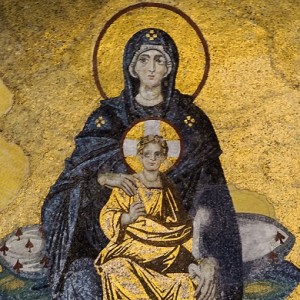
We’ve all experienced walking into a church in which the architecture and/or the sacred art was… let’s say "unpleasant" to the point of distraction. And we’ve all had the experience of entering a church whose beauty draws us into the mysteries of the Faith and upward to God and to worship. Sacred art can and should have a profound effect on our spiritual lives.
David Clayton has been thinking about sacred art for many years. Prof. Clayton moved to the US from his native England in 2009 and was for several years artist in residence at Thomas More College in New Hampshire where his icons adorn the college’s chapel. Currently he is Provost of Pontifex University where he designed their unique Master of Sacred Arts program, a formation in creativity for all (not just artists). His blog and podcast are at thewayofbeauty.org. His books include Painting the Nude - The Theology of the Body and the Representation of Man in Christian Art and The Way of Beauty, a book our Wyoming Catholic College seniors read in their study of art.
David Clayton was here in Lander delivering a lecture to the college last Friday entitled “Why Sacred Art is Necessary to the Faith.” Saturday morning before a bit of Wyoming hiking, Prof. Clayton was kind enough to record this interview about sacred art and beauty.
If you’re interested in watching David Clayton’s entire presentation, you can access it at the college website, wyomingcatholic.edu.