220.7K
Downloads
400
Episodes
Weekly conversations about the Liberal Arts and The Great Books with Wyoming Catholic College professors, board members,and guests.
Episodes
Oct 13, 2020
Oct 13, 2020
12 min
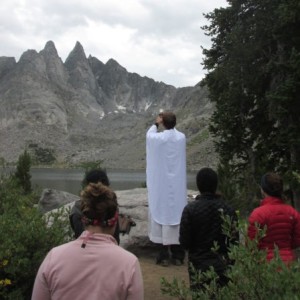
“Ours is an education of immersion,” we say on our college website “immersion in the Western tradition, immersion in the beauty and challenges of the wilderness, immersion in the treasures of our Catholic spiritual heritage.”
When planning a time to record this interview our Latin rite college chaplain Msgr. Daniel Seiker, Monsignor pulled out his schedule: “11:00 AM confessions, 11:35 Mass, 1:00 PM Adoration, 3:30 to 5:00 confessions, 5:00 PM Benediction.” He didn’t add the numerous appointments he has with students seeking spiritual direction. So it’s safe to say that our students are able to experience “immersion in the treasures of our Catholic spiritual heritage” and that we keep our chaplains exceptionally busy.
Oct 6, 2020
Oct 6, 2020
14 min
Poet Sally Thomas in the August/September issue of First Things wrote, “It is one thing to talk about the Resurrection. It is quite another to see the Easter fire struck in the night, the candle lit, the light of Christ filling the tomblike darkness of the waiting church. As a Catholic, I live and relive that liturgy every year; every year it astonishes me as no amount of evidence-based argument—The Case for the Resurrection—could ever do. Yes, yes, I want to say to the apologist, I get it. But when the lights come on and the bells ring and the music starts, I know it.”
What Sally Thomas describes in her article is experiential knowing or, as we call it here at Wyoming Catholic College, poetic knowing. It’s a mode of knowing that is, in fact, the beginning and the end of a liberal arts education.
Sep 29, 2020
Sep 29, 2020
15 min
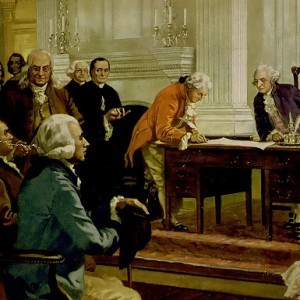
In an op-ed column in USAToday last week, Wyoming Catholic College senior Anthony Jones wrote: “I gathered with the entire student body of Wyoming Catholic College on Sept. 17, 2019, for a mandatory celebration of Constitution Day. We began with the Pledge of Allegiance, witnessed a lively panel discussion between professors on the history and modern relevance of America’s founding principles, and concluded by singing patriotic songs.”
Anthony Jones went on, “If you are a student at a typical American university, that description probably sounds foreign to anything you have experienced. Anti-Americanism has spread across college campuses like a wildfire, igniting rage and resentment against anything perceived as oppressive — even the American flag. As a result, most universities would likely shy away from a celebration of our nation’s founding in favor of more ‘inclusive’ events.”
On September 17 of this year, Anthony along with the rest of the student body of Wyoming Catholic College as well as faculty and staff gathered to celebrate Constitution Day 2020.
This year we heard from retired federal judge, Dr. Leon Holmes. Judge Holmes received his PhD in political science from Duke University and his JD from the University of Arkansas School of Law. He served sixteen years on the United States District Court for the Eastern District of Arkansas. Retiring from the court earlier this year, Judge Holmes is a visiting professor this fall at Wyoming Catholic College.
Sep 22, 2020
Sep 22, 2020
19 min
It’s a word we don’t hear very often these days, but one that was of utmost importance to our ancestors—actual and figurative. In fact, they couldn’t live without it. The word is “honor.”
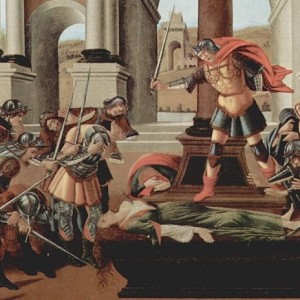
Ancient Romans practiced a timocratic—that is, an honor-loving—way of life. The Roman historian Livy in particular highlights the great deeds done for the honor of the city and for personal honor as well as the heinous and dishonorable crimes of, for example, the early kings of Rome—crimes that led to their downfall and exile.
Wyoming Catholic College sophomores have been reading Livy with Dr. Pavlos Papadopoulos. In this interview, Dr. Papadopoulos begins by responding to one of his own paper prompts.
Sep 15, 2020
Sep 15, 2020
15 min
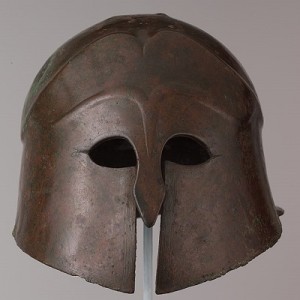
Sing, goddess, the anger of Peleus’ son Achilles
Those words are among the first Wyoming Catholic College freshmen read as fall semester begins. They open Homer’s Iliad. In the epic, “Atreus’ son the lord of men,” that is, Agamemnon so offends Achilles that Achilles refuses to fight. As a result, the Greeks suffer defeat after defeat before the walls of Troy, being driven back and back to their ships on the beach. Until....
Dr. Glenn Arbery, President of Wyoming Catholic College loves Homer’s Iliad and is once again in the classroom with freshmen introducing this, one of the greatest of The Great Books.
Sep 8, 2020
Sep 8, 2020
24 min
The tendency of science to reduce all of the world and life in it to predictable laws of physics is not new. And poets since William Wordsworth two hundred years ago have insisted that life ought not to be reduced.
Since the theme of this year’s Wyoming School was “Beauty is Truth: Science and the Catholic Imagination,” we looked to poets to help us inform our imaginations as we look at world around us, the heavens, and our own human nature.
The poetry we read and discussed is all available online for free.
- Henry Vaughn, “Water-fall”
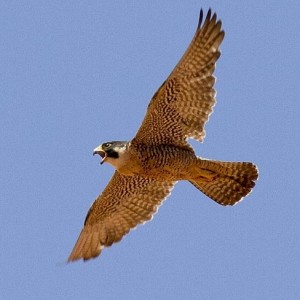
- Gerard Manley Hopkins, “God’s Grandeur,” “Pied Beauty,” “The Windhover”
- William Wordsworth, “The World is Too Much With Us,” “The Tables Turned”
- Robert Frost, “Never Again Would Bird’s Song Be the Same”
- Edna St. Vincent Millay, “Euclid alone has looked on Beauty bare”
Sep 1, 2020
Sep 1, 2020
1hr 10 min
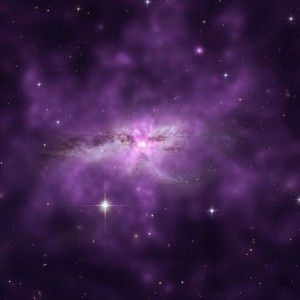
“Saint Thomas, who was as simple as he was wise,” wrote Jacques Maritain, “defined the beautiful as that which, being seen, pleases: id quod visum placet. These four words say all that is necessary: a vision, that is to say, an intuitive knowledge, and a delight.”
At this summer’s Wyoming School of Catholic Thought, we began by looking at the Medieval cosmos. It is a beautiful vision that, alas, turns out not to be true. Then we looked at the modern vision—the vision of scientism—in which the universe is nothing but a randomly constituted result of elementary particles bumping into each other. It is a universe without goodness, beauty, or truth—save the truth (maybe) of mathematics and physics.
Yet the topic of our week together was, “Beauty is Truth: Science and the Catholic Imagination.”
After we reduced the Medieval cosmos to “fermions and bosons,” Dr. Jeremy Holmes began putting the world back together arguing that beauty is a necessary part of the scientific endeavor. His lecture was over an hour long, but will, I think, be well worth your time and concentration. Hearing it again brought great delight so, using Thomas' definition, it can be called a beautiful lecture.
Aug 25, 2020
Aug 25, 2020
23 min
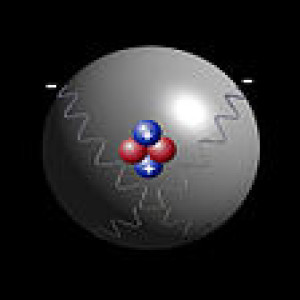
Duke University professor and philosopher Alex Rosenberg began an essay on Scientism with a series of questions and his answers:
- Is there a God? No.
- What is the nature of reality? What physics says it is.
- What is the purpose of the universe? There is none.
- What is the meaning of life?
- Why am I here? Just dumb luck.
- Does prayer work? Of course not.
- Is there a soul? Is it immortal? Are you kidding?
- Is there free will? Not a chance!
- What happens when we die? Everything pretty much goes on as before, except us.
- What is the difference between right and wrong, good or Bad? There is no moral difference between them.
- Is abortion, euthanasia, suicide, paying taxes, foreign aid, or anything else you don’t like forbidden, permissible, or sometimes obligatory? Anything goes.
- Does history have any meaning or purpose? It’s full of sound and fury, but signifies nothing.
At this year’s Wyoming School of Catholic Thought, Dr. Tiffany Shubert began by talking about the Medieval cosmos, a cosmos full of meaning, harmony, and truth. And last week’s After Dinner Scholar podcast was her lecture about the Medieval cosmos.
Next, we held a seminar discussing Alex Rosenberg’s essay “Scientism Versus the Theory of Mind” with its opening series of questions and answers. Before the seminar began, to avoid unnecessary intellectual whiplash, Dr. Jim Tonkowich spoke about how we got from a reality filled with the presence of God and with purpose to Rosenberg’s comment that, “Reality is the forsightless play of fermions and bosons producing the illusion of purpose.”
Aug 18, 2020
Aug 18, 2020
47 min
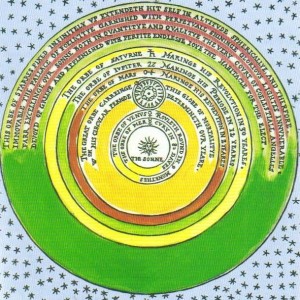
In the Epilogue to his book The Discarded Image: An Introduction to Medieval and Renaissance Literature, C. S. Lewis wrote, “I have made no serious effort to hide the fact that the old [Medieval] Model [of the universe] delights me as I believe it delighted our ancestors. Few constructions of the imagination seem to me to have combined splendour, sobriety, and coherence in the same degree. It is possible that some readers have long been itching to remind me that it had a serious defect; it was not true.”
Last week the annual Wyoming School of Catholic Thought was held here in Lander. The topic was “Beauty is Truth: Science and the Catholic Imagination.” Our readings in science and in literature considered this question of how we see the world, how we image it even before we think about it.
That began with a look at Medieval science and cosmology. The group read and discussed chapter 5 and the Epilogue from Lewis’ The Discarded Image guided by Dr. Tiffany Schubert who offered this introduction to the topic.
Aug 11, 2020
Aug 11, 2020
11 min
A gentleman, well into his 70s with a PhD in law is in the process of making his college years’ dream come true. He wanted to study classics as an undergraduate, but his father had other ideas. He wouldn’t pay for a degree in classics, and so my friend took a pre-law degree followed by law school. But the love for the classics and the liberal arts never left him. Now, in fact, he’s studying the Liberal Arts.
Last week the After Dinner Scholar featured a conversation with Dr. John Mortensen of the Aquinas Institute about The Great Books Core Curriculum, a joint venture with Wyoming Catholic College to offer distance learning courses in the Liberal Arts for undergraduate credit beginning this fall.
Our guest this week, Wyoming Catholic College theologian Dr. Kent Lasnoski, serves as the Academic Dean of the program.