

220.7K
Downloads
400
Episodes
Weekly conversations about the Liberal Arts and The Great Books with Wyoming Catholic College professors, board members,and guests.
Episodes
Dec 14, 2021
Dec 14, 2021
44 min
Twentieth century existentialist philosopher Jean-Paul Sartre commented, “Every existing thing is born without reason, prolongs itself out of weakness and dies by chance.” And it’s not too surprising how many of our contemporaries would agree.
Last spring semester, Dr. Scott Olsson, Associate Professor of Mathematics and the Natural Sciences, enjoyed a sabbatical and, as is the rule for professors on sabbaticals at Wyoming Catholic College, he was asked to deliver a lecture presenting his sabbatical research and ruminations to the entire school.
Thus in November, our monthly All-School Lecture featured Dr. Olsson speaking on “What is the World For?” It’s our pleasure to share with you his thought-provoking tonic for our troubled era.

Dec 7, 2021
Dec 7, 2021
16 min
Verses I made once glowing with content;
Tearful, alas, sad songs must I begin.
See how the Muses grieftorn bid me write,
And with unfeigned tears these elegies drench my face.
Anicius Manlius Severinus Boëthius who wrote those words had good reason to be grieftorn and to drench his face with unfeigned tears. A successful politician, he was accused of treason in AD 523 and executed a year later. The verses were written while he was in prison awaiting what he knew would be a painful, horrid death. It is the beginning of his most famous work The Consolation of Philosophy.
As Boethius laments, Lady Philosophy appears to him. She casts out the lamenting muses and begins what she refers to as Boethius’ “cure.”
Dr. Jason Baxter has been teaching The Consolation of Philosophy for some time now and is our guest this week on The After-Dinner Scholar.
Nov 30, 2021
Nov 30, 2021
17 min
Each semester here at Wyoming Catholic College, we hold an “All-School Seminar.” All students, faculty, and any interested staff read the same work and meet in groups led by our seniors to discuss what they’ve read. This fall’s All-School Seminar was Plato’s dialogue between Socrates and Ion.
In the dialogue, Socrates greets Ion, a rhapsode, that is, a reciter of poetry. Ion specializes in the work of the epic poet Homer—The Iliad and The Odyssey. When Socrates meets him, he is returning from a religious festival where in competition with other rhapsodes, he took first prize for his recitation.
This week, Dr. Pavlos Papadopoulos, shares with us about Socrates’ and Ion’s conversation.
Nov 23, 2021
Nov 23, 2021
15 min
It’s Thanksgiving week and most of us will gather this Thursday to count our blessings and offer thanks to God "from Whom all blessings flow.”
In giving thanks, it’s easy to remember the extraordinary things in life—promotions, luxuries, home, family, and friends. But there’s much to be said about the extraordinarily ordinary things of life.
Gerard Manley Hopkins gives us an example of praise for the ordinary. And this week Wyoming Catholic College president, Dr. Glenn Arbery discusses Hopkin’s poem, “Pied Beauty.”
Nov 16, 2021
Nov 16, 2021
16 min
“For no path,” wrote Anicius Manlius Severinus Boethius, “is more open to the soul for the formation thereof than through the ears. Therefore when rhymes and modes have penetrated even to the soul through these organs, it cannot be doubted that they affect the soul with their own character and conform it to themselves.”
Boethius lived from about AD 470 to 524 and is known primarily as a Roman scholar, a Christian philosopher, and a statesman. And it’s because he was a scholar, philosopher, and statesman that he became interested in music.
Prof. Christopher Hodkinson assigned Boethius’ “Fundamentals of Music” to Wyoming Catholic College juniors in the course Music in the Western tradition.

Nov 9, 2021
Nov 9, 2021
12 min
In early October, Dr. Jason Baxter told us about teaching writing to our freshmen. A friend who teaches at another college heard about that and commented, “Good luck with that!” Dr. Baxter had more than good luck, he had great success.
In addition to getting the freshmen to write and rewrite and rewrite and rewrite, he taught them one method of refinement after another. Dr. Baxter also promised an essay competition as part of this freshman Trivium course. That competition happened a couple of weeks ago and Dr. Baxter reported a great deal of raucous cheering and applause. The students are genuinely excited about writing.
The first-place winner—by student and faculty acclaim—was Marietta Mortensen. Marietta hails from right here in Lander, Wyoming, is the eldest of nine, and is often cantor at mid-day Mass in the college chapel. She's our guest on this episode of The After-Dinner Scholar.
Nov 2, 2021
Nov 2, 2021
17 min
Because life is brief
and many are the pains
which, living and struggling, everyone sustains
let us follow our desires,
passing and consuming the years
because whoever deprives himself of pleasure,
to live with anguish and with worries
doesn’t know the tricks
of the world or by what ills
and by what strange happenings
all mortals are almost overwhelmed.
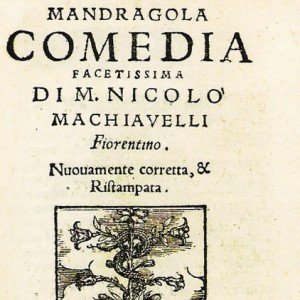
“Because life is brief…let us follow our desires” has a contemporary ring to it. Yet those words were penned in 1512 by the playwright and philosopher Niccolò Machiavelli in his play La Mandragola, The Mandrake.
This semester, Dr. Tiffany Schubert is teaching Machiavelli’s play to Wyoming Catholic College juniors and it has led to amazing classroom conversations. Why would that be?

Oct 26, 2021
Oct 26, 2021
13 min
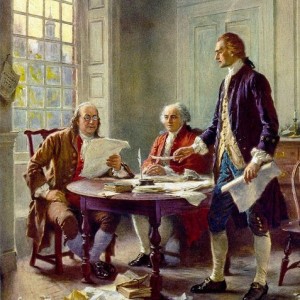
“Every generation of Americans,” writes Dr. Christopher Flannery, “from the beginning, has had to answer for itself the question: how should we live? Our answers, generation after generation, in war and in peace, in good times and bad times, in small things and in great things through the whole range of human affairs, are the essential threads of the larger American story.”
While our podcast typically features our Wyoming Catholic College faculty, last week Dr. Christopher Flannery was in Lander and is our guest this week. He is a senior fellow of the Claremont Institute, contributing editor of the Claremont Review of Books. He was a professor in the Honor’s College at Azusa Pacific University, where he taught for over 30 years.
Dr. Flannery earned his bachelor’s degree from California State University, Northridge, his M.A., and Ph.D. in Government from the Claremont Graduate School, and an M.A. in International History from the London School of Economics and Political Science. He is the author and voice of “The American Story” podcast.
Oct 19, 2021
Oct 19, 2021
19 min
In the preface to his History of Rome Livy wrote that he wanted to explore, “what was the life, what the mores, by what men, and by what arts—at home and at war—imperium was born and augmented.”
In the course, “Exodus and the American Vision,” What was the life, what the mores, by what men, and by what arts? are questions Dr. Pavlos Papadopoulos’s senior humanities students are asking about the American character with the help of authors including John Adams, Edmund Burke, Thomas Jefferson, and others.
Oct 12, 2021
Oct 12, 2021
14 min
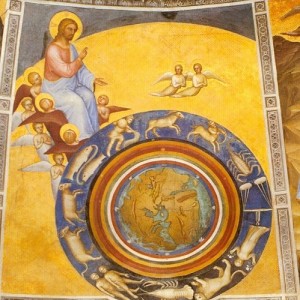
While Genesis 2 tells us that on the seventh day God rested, Thomas Aquinas noted, “It would seem that God did not rest on the seventh day from all His work. For it is said (John 5:17), ‘My Father worketh until now, and I work.’ God indeed ‘worketh until now’ by preserving and providing for the creatures He has made, but not by the making of new ones.”
Perhaps taking a cue from Aquinas, the hymnist wrote, “What God’s almighty power hath made His gracious mercy keepeth.” God made all things and preserves all things whatever “preserves all things” means.
Wyoming Catholic College theologian, Dr. Travis Dziad has been considering this question for some time now taking St. Thomas as his guide.