
220.7K
Downloads
400
Episodes
Weekly conversations about the Liberal Arts and The Great Books with Wyoming Catholic College professors, board members,and guests.
Episodes

Oct 5, 2021
Oct 5, 2021
16 min
Someone once quipped, “Thoughts are formed as they pass out the lips or through the fingertips.” That is, speaking or writing gives our thinking clarity and precision.
And so at Wyoming Catholic College our students not only read the Great Books, but they discuss them and write about them.
As our freshmen discover, good discussion skills and good writing skills are not innate. They need to be learned and require study and diligent practice.
Dr. Jason Baxter this semester has been working with our freshmen as they improve their writing skills.

Sep 28, 2021
Sep 28, 2021
16 min
After fleeing the destruction of Troy while leading his young son and carrying his aged father, Aeneas wandered seven years across the Mediterranean. Finally, after his father's death, he and his ships made landfall in Italy. This was the land of his destiny. There he would conquer, establish the Trojans, and found the kingdom that would become Rome.
But before setting out to war, Aeneas told the Sibyl of Apollo, “Since here, they say, are the gates of Death’s king and the dark marsh where the Acheron comes flooding up, please, allow me to go and see my beloved father, meet him face-to-face.”
Dr. Adam Cooper has been reading Virgil’s Aeneid with our Wyoming Catholic College sophomores, guiding them as the Sibyl guided Aeneas into the Underworld.

Sep 21, 2021
Sep 21, 2021
17 min
In the first chapter of his letter to the Christians in Rome, St. Paul wrote, “For the wrath of God is revealed from heaven against all ungodliness and wickedness of men who by their wickedness suppress the truth. For what can be known about God is plain to them, because God has shown it to them. Ever since the creation of the world his invisible nature, namely, his eternal power and deity, has been clearly perceived in the things that have been made. So they are without excuse” (Romans 1:18-20).
History bears out the truth of St. Paul’s statement. You don’t need a Bible to know that God exists and that he is eternal, powerful, intelligent, just, and creative. We all live on the same planet, see the same nature, and are able to come to the same obvious conclusions—even if some people refuse.
Nonetheless, Christianity is not a nature religion. It is a revealed religion. God has spoken through the words of the inspired writers of Scripture and through the Church.
So where are the boundaries between what any human can understand about God through reason and what requires revelation?
Prof. Kyle Washut has been discussing just that with our Wyoming Catholic College sophomores as they read St. Thomas Aquinas’ Compendium Theologiae together.
Sep 14, 2021
Sep 14, 2021
14 min
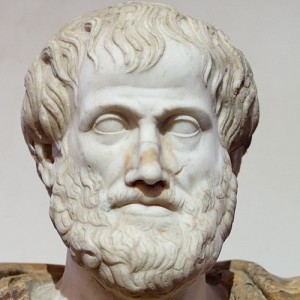
Aristotle’s Categories,” writes Davidson College Professor of Philosophy, David Studtmann, “is a singularly important work of philosophy. It not only presents the backbone of Aristotle’s own philosophical theorizing but has exerted an unparalleled influence on the systems of many of the greatest philosophers in the western tradition.”
And freshman philosophy at Wyoming Catholic College begins by being thrown into the deep end as students jump into Aristotle’s Categories. In that work, Aristotle outlines the framework needed to read and understand the works students will encounter later in their intellectual journey: The Physics, The Metaphysics, and The Nicomachean Ethics.
Their guide to The Categories this semester is our guest this week, Dr. Michael Bolin, whose specialties are the works of St. Thomas Aquinas and Aristotle.
Sep 7, 2021
Sep 7, 2021
12 min
In the past few weeks, this podcast has featured introductions to two of three new faculty at Wyoming Catholic College: Dr. Paul Giesting and Dr. Daniel Shields. Today's podcast introduces the third, Prof. Stephen Hill.
Prof. Hill joins Wyoming Catholic College to teach humanities and the Latin program which, of course, is taught as spoken Latin. Prof. Hill also has proficiency in speaking classical Greek.
Aug 31, 2021
Aug 31, 2021
11 min
“The object of a new year,” quipped G. K. Chesterton, “is not that we should have a new year, but that we should have a new soul.”
While Mr. Chesterton probably had January 1st in mind, anyone in education—including students and parents—knows that the new year begins when school begins and our Wyoming Catholic College students are now in their second week of classes.
A week ago Sunday, as our freshmen matriculated at Wyoming Catholic College, thus beginning a new year, President Glenn Arbery and Dean Kyle Washut had some words of wisdom and encouragement. Last week’s podcast featured Dr. Arbery’s thoughts. This week, we’ll turn to Dean Washut as he discusses a distinctly Wyoming phenomenon all students has experience on their 21-day backpacking expedition: snow in August.
Aug 24, 2021
Aug 24, 2021
12 min
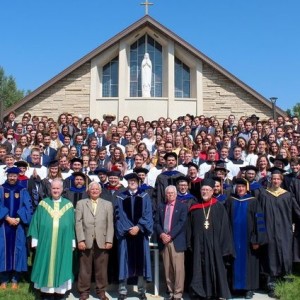
Last Saturday, we welcomed our 68 freshmen—our largest freshman class ever—back from their 21-day backpacking expedition. On Sunday, with students in their Sunday best and faculty garbed in their academic regalia, Msgr. Daniel Seiker, our Latin chaplain celebrated convocation Mass. After a brief break for refreshments, the college community gathered again for the annual matriculation ceremony.
At matriculation, freshmen are formally welcomed into our community of learning and each freshman comes forward to sign his or her name in the big leather-bound book that every freshman has signed since the school’s beginning.
As you might imagine, our college president, Dr. Glenn Arbery had some words of wisdom and encouragement for our freshmen. Here are Dr. Arbery’s remarks.
Aug 17, 2021
Aug 17, 2021
14 min
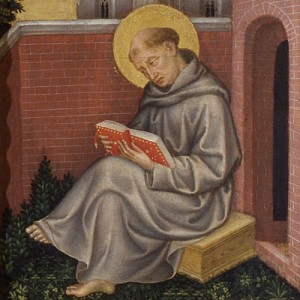
“Because philosophy arises from awe,” wrote St. Thomas Aquinas, “a philosopher is bound in his way to be a lover of myths and poetic fables. Poets and philosophers are alike in being big with wonder.”
Last week our guest on The After-Dinner Scholar was Dr. Paul Giesting, newly-arrived professor of mathematics and science. Today our guest is philosopher, Dr. Daniel Shields who is also new to the college faculty.
Dr. Shields did his undergraduate work at Thomas Aquinas College and received his PhD from the Catholic University of America. His main interest is in philosophy of nature and science, ethics, moral psychology, and medieval philosophy.
Aug 10, 2021
Aug 10, 2021
17 min
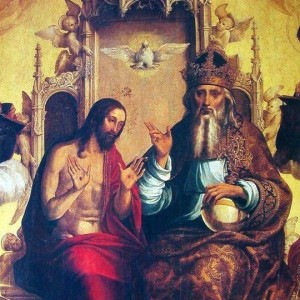
Jesuit theologian Karl Rahner wrote, “Christians are, in their practical life, almost mere ‘monotheists.’ We would never know they believed in the Trinity, because nothing about their lives reflects trinitarian engagement.”
While Christians are monotheists—that is we believe in only one God—we are not what Rahner called mere monotheists. We believe there is one God who exists eternally as a Trinity of Persons: Father, Son, and Holy Spirit. “God in three Persons, blessed Trinity,” as the hymnist put it.
On May 4, our podcast featured this week's guest, Dr. Jeremy Holmes, talking about his new book Cur Deus Verba: Why the WORD Became Words. The book is a theology of Scripture, but it begins with a chapter entitled “Why God Created: The Trinity.”
Aug 3, 2021
Aug 3, 2021
16 min
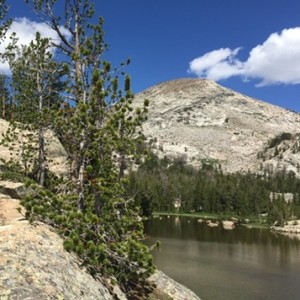
As the new Wyoming Catholic college freshmen—all 68 of them—left for their 21-day backpacking expedition, we reminded them that in freshman theology they’ll be studying God’s second book, The Bible. In the wilderness, they should read their Bibles, but they’re to concentrate on God’s first book, the created world. Mountains, rivers, rocks, trees, flowers, soil, birds, and animals.
That being said, however, in addition to studying the Bible freshman year, they’ll also be studying mountains, rivers, rocks, trees, flowers, soil, birds, and animals in a more systematic way in their freshman course on field science.
This week's guest, Dr. Paul Giesting has just joined the Wyoming Catholic College faculty to teach, among other things, field science.