
220.7K
Downloads
400
Episodes
Weekly conversations about the Liberal Arts and The Great Books with Wyoming Catholic College professors, board members,and guests.
Episodes
Feb 22, 2022
Feb 22, 2022
16 min
Regarding freedom, First Things editor Dr. R. R. Reno writes, “It’s a very American word. But do we understand freedom’s promise? To what end does God liberate the Israelites? What is the freedom for which Christ has set us free? Is an unhindered man a free man? Can I remain free even when held in captivity?”
For most people today, freedom means the ability to do as I wish, when I wish, as I wish, and with whomever I wish. Freedom is the sovereign self doing as it pleases. The ancient Greek stoic philosopher Epictetus sounding extremely contemporary asked, “Is freedom anything else than the right to live as we wish?” Then, answering his own questions, he responded, “Nothing else.”
This coming March 25 and 26 in Phoenix, Arizona First Things is sponsoring an intellectual retreat on the topic of freedom. Members of the Wyoming Catholic College faculty including Dr. Virginia Arbery will serve as seminar leaders. Dr. Arbery is our guest this week.
For more information on the First Things Intellectual Retreat on Freedom, follow this link.

Feb 15, 2022
Feb 15, 2022
15 min
Since at least 1891 when Pope Leo XIII issued the encyclical Rerum Novarum, the Catholic Church has debated the relationship between capital and labor. It has been and continues to be a complex and somewhat contentious one.
Not at all deterred by that, Wyoming Catholic College senior, Mr. Thomas Sponseller delivered a fine senior oration two weeks ago on the topic “Catholics in a Capitalist World: Understanding Capitalism with Catholic Social Teaching.”
Feb 8, 2022
Feb 8, 2022
13 min
One of the highlights of the academic year here at Wyoming Catholic College is Senior Oration Week. During the fall semester, each senior prepares a thesis, a major research paper on a topic of his or her choosing. Then early in the spring semester, each senior presents the thesis as a half-hour oration with an additional half hour for questions—first from a faculty panel and then from the audience.
Last week was Oration Week 2022 and our seniors did not disappoint.
Miss MaryAnne Speiss used her thesis and oration to explore a question that had been on her mind throughout her four years at Wyoming Catholic College. Her title was, “Ancient ‘Goodness’—Does God Hate It, Tolerate It, or Demand It?: Nietzsche and Lewis on Good, Evil, and Spirited Christianity.”
Feb 1, 2022
Feb 1, 2022
15 min
“It is a good rule,” wrote C. S. Lewis, “after reading a new book, never to allow yourself another new one till you have read an old one in-between.”
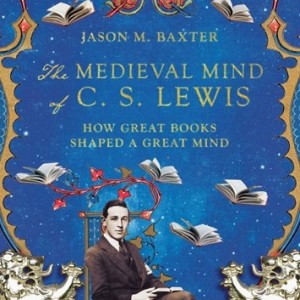
About three years ago, Dr. Jason Baxter taught the distance learning course “The Medieval Mind of C. S. Lewis” after which he turned his lectures into chapters for the book The Medieval Mind of C. S. Lewis: How Great Books Shaped a Great Mind which will be available this March 15th—though you may, of course pre-order it today.
We tend to forget that in addition to being a popular novelist and apologist, Lewis’s day job was professor of Medieval and Renaissance Literature at Oxford University and later at Cambridge University. That is, he was first and foremost a scholar and his fiction and apologetic works are tied more tightly to his scholarship than most of his readers realize.
To order Dr. Baxter's book, The Medieval Mind of C. S. Lewis click here.
Jan 25, 2022
Jan 25, 2022
12 min
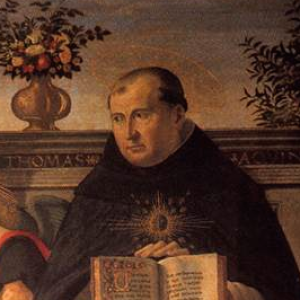
The story goes that the church sacristan overheard Thomas Aquinas speaking in prayer before the crucifix. Thomas was asking whether all he had written about the Christian faith was correct. “You have spoken well of me, Thomas,” came the audible answer, “What is your reward to be.” Thomas replied, “Non nisi te, Domini. Nothing but You, Lord.”
On January 28 we celebrate the Feast Day of St. Thomas Aquinas and while most Catholics know that he has a special place in the Church, we may not appreciate how great a place he occupies.
Dr. Michael Bolin has been studying Thomas Aquinas at least a far back as his undergraduate days at Thomas Aquinas College. This week, he'll give us a kind of crash course in the life and teaching of The Angelic Doctor.
Jan 18, 2022
Jan 18, 2022
14 min
Not long after Wyoming Catholic College began, students organized Cowboys for Life in order to speak for the protection of the unborn. Cowboys for Life has organized trips to Marches for Life in Denver and San Francisco. They spent hours praying at the corner of Second and Main here in Lander during 40 Days for Life. And on November 30, they organized an all-night prayer vigil on the eve of the oral arguments before the Supreme Court about Dobbs v. Jackson Women's Health Organization, the case that may be the end of Roe v. Wade.
The current president of Cowboys for Life is Wyoming Catholic College junior Jill Cook who begins by telling us how she became active in the pro-life movement.
Jan 11, 2022
Jan 11, 2022
12 min
It’s January in Wyoming. The weather is cold, the days are short, and we have the pleasure of planning the annual Wyoming School of Catholic Thought, June 12-17, when adult learners from across the country will gather here in Lander to enjoy something of what our students experience during their years at Wyoming Catholic College.
In past years participants in the Wyoming School looked at friendship, courage, science and imagination, and Shakespeare’s Rome. This year our topic is “Mortality and Eternity: The Question of Death.”
Jan 4, 2022
Jan 4, 2022
19 min
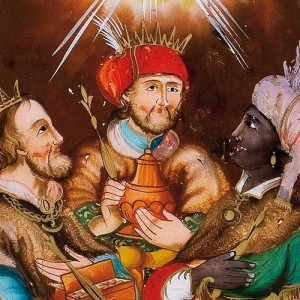
“What are you doing, O Magi?” asked St. Bernard of Clairvaux, “Do you adore a little Babe, in a wretched hovel, wrapped in miserable rags? Can this Child be truly God? … Are you become foolish, O Wise Men … Yes, these Wise Men have become fools that they may be wise!”
With the presents snug in their new homes, the wrapping paper recycled, the New Year’s Eve noisemakers silent, the so-called “holiday season” spent, we can breath a sigh of relief and look forward to celebrating Epiphany.
Epiphany, a solemnity, means “showing” and the Church draws our attention to the Three Magi, to John the Baptist, to Jesus’ first miracle turning water into wine. “Can this Child be truly God?” Epiphany a firm and reliable, “Yes!”
Wyoming Catholic College faculty, staff, and in-town alumni attend Holy Rosary parish here in Lander. This week, our pastor, Fr. James Schumacher gives us some insights on the celebration of Epiphany.
Dec 28, 2021
Dec 28, 2021
15 min
St. John Henry Newman wrote regarding a liberal education, “If then a practical end must be assigned to a University course, I say it is that of training good members of society... It is the education which gives a man a clear, conscious view of their own opinions and judgements, a truth in developing them, an eloquence in expressing them, and a force in urging them. It teaches him to see things as they are, to go right to the point, to disentangle a skein of thought to detect what is sophistical and to discard what is irrelevant.”
Joseph Susanka arrived at Wyoming Catholic College just before our very first freshman class in 2007. Since then he has had numerous jobs at the college culminating in his two current positions. He is both the college’s Vice President for Advancement and freshman dad.
Dec 21, 2021
Dec 21, 2021
14 min
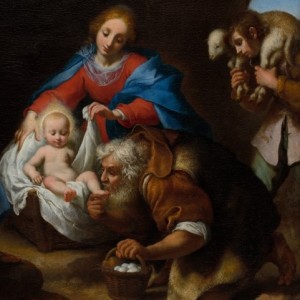
The third century theologian Origen wrote concerning God becoming man, “The human understanding with its narrow limits is baffled, and struck with amazement at so mighty a wonder knows not which way to turn, what to hold to, or whither to betake itself… To utter these things in human ears and to explain them by words far exceeds the powers we possess either in our moral worth or in mind and speech.”
Wyoming Catholic College theologian and Bible scholar, Dr. Jeremy Holmes quotes Origen in his book Cur Deus Verba: Why the Word became Words. On the one hand, what can we say as we contemplate the mystery of God, the Creator of all things, as a swaddled new-born lying in a bed of straw?
On the other hand, while words are not fully sufficient, if we are to obey the commandment to love God with our minds, we can surely—we must surely—say something.