

220.7K
Downloads
400
Episodes
Weekly conversations about the Liberal Arts and The Great Books with Wyoming Catholic College professors, board members,and guests.
Episodes

Jun 18, 2026
Jun 18, 2026
28 min
When the framers of the Declaration of Independence listed “self-evident truths,” they began with three truths that precede any sort of state: “that all men are created equal, that they are endowed by their Creator with certain unalienable Rights, that among these are Life, Liberty and the pursuit of Happiness.” Yet about one third of the signers of the Declaration were slave owners. Wyoming Catholic College professor Dr. Pavlos Papadopoulos helps us to make some sense of that.
Mar 12, 2024
Mar 12, 2024
16 min
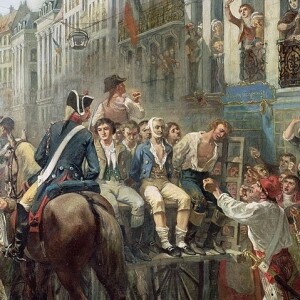
Observing the French Revolution, British Member of Parliament, Edmund Burke, noted, “But what is liberty without wisdom and without virtue? It is the greatest of all possible evils; for it is folly, vice, and madness, without tuition or restraint.”
Over the past few weeks, our Wyoming Catholic College juniors have been considering the French Revolution with their professor Dr. Pavlos Papadopoulos.
Dec 13, 2022
Dec 13, 2022
22 min
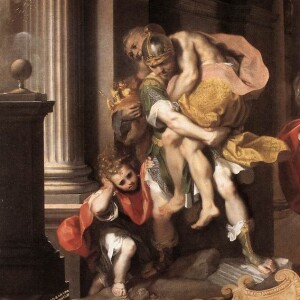
When Aeneas visits the underworld in Virgil's Aeneid, he sees great heroes who have died and great heroes yet to be born.
Here is Caesar, and all the offspring
of Julus destined to live under the pole of heaven.
This is the man, this is him, whom you so often hear
promised you, Augustus Caesar, son of the Deified,
who will make a Golden Age again in the fields
where Saturn once reigned, and extend the empire beyond
the Libyans and the Indians....”
It’s no surprise that Virgil wrote such extravagant praise of Caesar Augustus into his epic. After all, Caesar Augustus gave him the job of creating the founding myth of the Roman Empire that had supplanted the Roman Republic.
As he has been teaching The Aeneid to our Wyoming Catholic College sophomores, Dr. Pavlos Papadopoulos has been thinking a great deal about that transition.
Nov 15, 2022
Nov 15, 2022
21 min
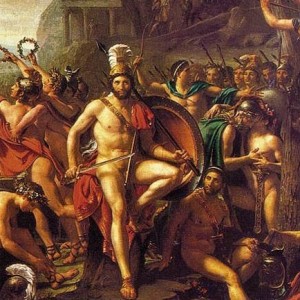
Ancient Sparta in the public imagination has long been an armed camp. It’s a city organized like an army to train all boys to be soldiers and all women to be hard as nails. And Spartans, we’re told, always fight to the death as they did at Thermopylae.
Dr. Stephen Hodkinson begs to differ. Dr. Hodkinson is Emeritus Professor of Ancient History at the University of Nottingham. He is co-organiser of the International Sparta Seminar and founder of the University of Nottingham’s Centre for Spartan and Peloponnesian Studies. And in 2010 he was awarded Honorary Citizenship of modern Sparta for his contributions to Spartan history.
He is also in Lander visiting his son, Wyoming Catholic College professor Christopher Hodkinson and kindly tells us about Ancient Sparta.
Articles by Stephen Hodkinson can be found here.
Oct 25, 2022
Oct 25, 2022
17 min
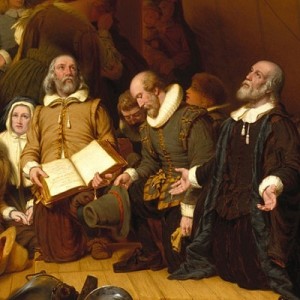
Last week on the After-Dinner Scholar, theologian Dr. Kent Lasnoski talked with us about the story of Israel in the Old Testament book of Exodus. This week we’ll continue the conversation about Exodus only we’ll jump ahead of Moses by three thousand years.
Within the Bible, the story of the Exodus, chronicling how God delivered Israel from slavery in Egypt lent a strong sense of identity to the American colonists, the founders, and African-Americans, and others.
Dr. Virginia Arbery has an abiding interest in story of the Exodus and our American imagination.
Oct 4, 2022
Oct 4, 2022
21 min
Studying the lives of men and women is complicated, but it is from that study that we see vice and virtue and the end results of each, we learn of honor and dishonor, sacrifice and selfishness, self-discipline and dissipation.
The Greek Platonist and priest of Apollo at Delphi, Plutarch understood the project of instruction by writing the lives of great Roman and Greeks.
Dr. Tiffany Schubert has been teaching Plutarch’s Lives with the Wyoming Catholic College sophomores.
Sep 20, 2022
Sep 20, 2022
9 min
"History," commented Harvard University historian, Dr. James Hankins, "is a road to sanity."
"Points of Light: The Church in the 19th Century," the upcoming free, six-week distance learning class with Dr. Jim Tonkowich, is intended to set listeners on that road to sanity in our increasingly insane era.
Why the nineteenth century? The Catholic Church at the dawn of the nineteenth century looked as though she was on the ropes at best and, at worst, down for the count. But God had other plans.
The course begins Thursday, September 29. To register for this free course, click here.

May 24, 2022
May 24, 2022
17 min
O last of Rome, among small-minded citizens,
The bickering children of your mother’s house,
Your gaze was calm and grave and kind
As is the glowing lamp
Upon the holy ikon’s deep-set brow.
Those lines are from the latest issue of the Wyoming Catholic College publication Integritas. They are the beginning of a poem called “Ode to Constantine XI” by Prof. Adam Cooper. While this podcast has featured any number of conversations about poem, it is a rare treat to feature a poem along with the poet.
To read "Ode to Constantine XI in Integritas click this link.
Mar 15, 2022
Mar 15, 2022
22 min
The ancient Greek historian, Thucydides tells us that as the Peloponnesian War broke out, “The Athenians thus long lived scattered over Attica in independent townships. Even after the centralization of Theseus, old habit still prevailed; and from the early times down to the present war most Athenians still lived in the country with their families and households, and were consequently not at all inclined to move now, especially as they had only just restored their establishments after the Median invasion. Deep was their trouble and discontent at abandoning their houses and the hereditary temples of the ancient constitution, and at having to change their habits of life and to bid farewell to what each regarded as his native city.”
The Peloponnesian War, in fact, changed life not only in Athens, but in Sparta and the rest of Greece forever. Strong and vibrant after defeating the Medes in the early fifth century BC, their conflict with one another—431-405 BC—brought weakness and eventually conquest by Philip of Macedonia and later the Romans.
It's not just a fascinating story, but one that may well speak to us today. Dr. Pavlos Papadopoulos has been teaching Thucydides’ History of the Peloponnesian War.
Oct 26, 2021
Oct 26, 2021
13 min
“Every generation of Americans,” writes Dr. Christopher Flannery, “from the beginning, has had to answer for itself the question: how should we live? Our answers, generation after generation, in war and in peace, in good times and bad times, in small things and in great things through the whole range of human affairs, are the essential threads of the larger American story.”
While our podcast typically features our Wyoming Catholic College faculty, last week Dr. Christopher Flannery was in Lander and is our guest this week. He is a senior fellow of the Claremont Institute, contributing editor of the Claremont Review of Books. He was a professor in the Honor’s College at Azusa Pacific University, where he taught for over 30 years.
Dr. Flannery earned his bachelor’s degree from California State University, Northridge, his M.A., and Ph.D. in Government from the Claremont Graduate School, and an M.A. in International History from the London School of Economics and Political Science. He is the author and voice of “The American Story” podcast.