220.7K
Downloads
400
Episodes
Weekly conversations about the Liberal Arts and The Great Books with Wyoming Catholic College professors, board members,and guests.
Episodes
Nov 21, 2023
Nov 21, 2023
12 min
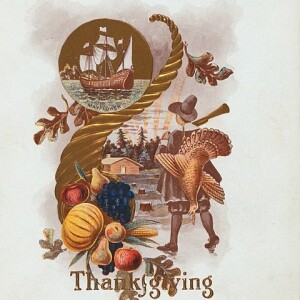
The great Roman statesman and orator, Marcus Tulius Cicero said:
In truth… while I wish to be adorned with every virtue, yet there is nothing which I can esteem more highly than being and appearing grateful. For this one virtue is not only the greatest, but is also the parent of all the other virtues.
The ancients understood—as most moderns don’t—that virtuous living makes us happy. Thus, Cicero argued, gratitude, thanksgiving is the gateway to happiness.
With the celebration of Thanksgiving Day approaching, Wyoming Catholic College President Kyle Washut had this to say about the virtue of thanksgiving.
Nov 14, 2023
Nov 14, 2023
14 min
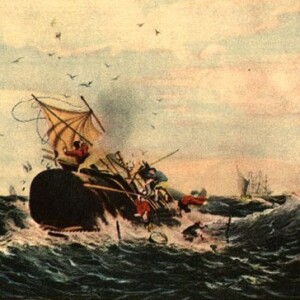
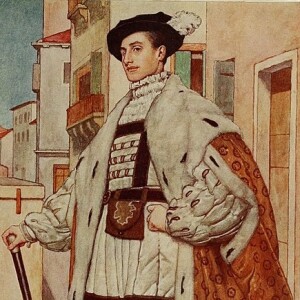
In Herman Melville’s Moby Dick, we meet Captain Ahab for the first time long after the Pequod has left Nantucket. “There was,” says Melville’s Ishmael, “an infinity of firmest fortitude, a determinate, unsurrenderable wilfulness, in the fixed and fearless, forward dedication of that glance. Not a word he spoke; nor did his officers say aught to him; though by all their minutest gestures and expressions, they plainly showed the uneasy, if not painful, consciousness of being under a troubled master-eye. And not only that, but moody stricken Ahab stood before them with a crucifixion in his face; in all the nameless regal overbearing dignity of some mighty woe."
Dr. Virginia Arbery has taught Moby Dick for years is, once again, reading it with our Wyoming Catholic College seniors many of whom are introduced to the book and Captain Ahab for the first time.
Nov 7, 2023
Nov 7, 2023
21 min
The quality of mercy is not strained.
It droppeth as the gentle rain from heaven
Upon the place beneath. It is twice blest:
It blesseth him that gives and him that takes.
’Tis mightiest in the mightiest; it becomes
The thronèd monarch better than his crown.
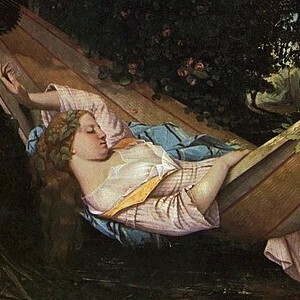
Those are the words of Portia, heroine of William Shakespeare’s Merchant of Venice as she defends her husband’s friend Antonio from the Jewish moneylender Shylock who, Antonio having defaulted on a debt, demands a literal pound of Antonio’s flesh.
Dr. Adam Cooper has been reading The Merchant of Venice with our Wyoming Catholic College juniors.
Oct 31, 2023
Oct 31, 2023
15 min
Once every semester at Wyoming Catholic College, we hold an All-School Seminar. For the fall seminar, a week ago, all of our students and faculty read and discussed Pieper’s Leisure: The Basis of Culture.
Pieper wrote in 1947 in what was a devastated Germany. Everything was damaged or destroyed and workers were a vital necessity at all levels of the culture. It was a world of what he calls "total work," a world he believed would lose its soul without leisure properly understood.
Philosopher Dr. Michael Bolin attended one of student-led seminars and had this to share.
Oct 24, 2023
Oct 24, 2023
14 min
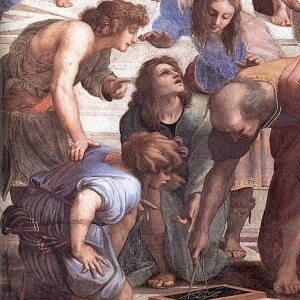
We're regularly told that the only kind of knowing of which we can be certain is "scientific" knowing. What does that mean? How does it apply to the world and our everyday lives.
Mathematician Dr. Scott Olsson has thought and taught a great deal about the questions surrounding science and what it can--and can't--tell us about the world around us. Here are some ideas he brings to his Wyoming Catholic College students.
Oct 17, 2023
Oct 17, 2023
11 min
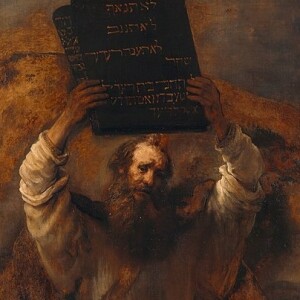
The theology curricular track at Wyoming Catholic College begins with "Salvation History in the Old Testament." The course is, for the most part, reading the narrative portions of the Old Testament from Genesis to Maccabees.
Dr. Jim Tonkowich has been teaching this freshman course this semester and shares some of the course's content and his own experience encountering the Old Testament with our students.
Oct 10, 2023
Oct 10, 2023
13 min
“Reading,” said Sir Francis Bacon, “maketh a full man; conference a ready man; and writing an exact man.”
Student academic life at Wyoming Catholic College mirrors Bacon’s comment. Our students read the Great and Good books of our civilization and come to class prepared for what Bacon called “conference.” We would say conversation. And while writing is part of most courses, freshmen take "Trivium 101—Writing Truthfully."
This week's guest, Dr. Tiffany Schubert, finds teaching Trivium 101 a great pleasure.
Oct 3, 2023
Oct 3, 2023
16 min
The Iliad, first of Homer’s great epics, tells the tale of the war between Greece and Troy as it unfolded on the plains outside that ancient city. And the focus of the tale is Achilleus, the greatest warrior on either side who, for most of the book, sits on the sidelines.
Dr. Glenn Arbery is both a scholar and teacher of The Iliad who, once again, is reading the epic with our Wyoming Catholic freshmen.
Sep 26, 2023
Sep 26, 2023
15 min
To graduate from Wyoming Catholic College, students need to spend at least ten weeks in the wilderness. That includes their three-week freshman expedition, a one-week freshman winter trip just after Christmas and six additional weeks over the next three years.
This week is Fall Outdoor Week at the college. Students are rafting, rock climbing, backpacking and fishing, and canyoneering.
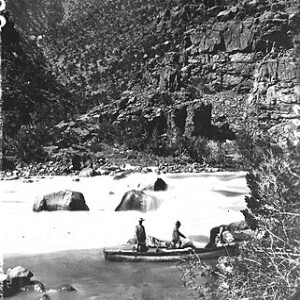
Last week I spoke with a senior who told me she was going on a trip she had wanted to do since she heard about it freshman year: rafting the Green River through the treacherous Lodore Canyon in northwest Colorado. And I recalled a podcast I recorded a few years ago with Paul Milligan who had just returned from guiding a trip through that canyon.
Here’s what Paul had to say.
Sep 19, 2023
Sep 19, 2023
16 min
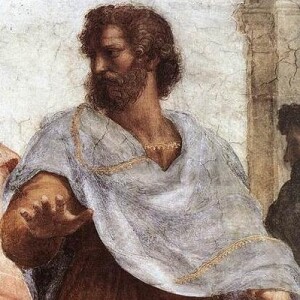
“Every art and every investigation, and similarly every action and pursuit,” wrote Aristotle at the beginning of his book on ethics, “is considered to aim at some good. Hence the good has rightly been defined as ‘that at which all things aim’.”
We all, Aristotle contends, aim at what we believe is the good. But how do we know what is truly good? And how is it possible as he tells us, that the way to aim at the good has to do with politics?
Dr. Pavlos Papadopoulos is reading Aristotle’s Nicomachean Ethics with our Wyoming Catholic College juniors. Here's what he had to say about the good.