220.7K
Downloads
400
Episodes
Weekly conversations about the Liberal Arts and The Great Books with Wyoming Catholic College professors, board members,and guests.
Episodes

Sep 12, 2023
Sep 12, 2023
11 min
Wyoming Catholic College has a new president, Kyle Washut. It seems fully appropriate that Prof. Washut, a native of Wyoming who has been part of the Wyoming Catholic College project since before the beginning of the college, should now take the helm.
In this podcast, President Washut tells us about the earliest days at the college as well as his hopes and plans for its future.
Sep 5, 2023
Sep 5, 2023
24 min
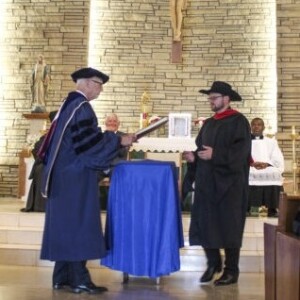
The college year at Wyoming Catholic College ends with the formality and pomp of graduation as we award degrees and bid another class farewell. The year begins with another, largely-forgotten ceremony equally formal, meaningful, and full of academic pomp: Matriculation in which each new freshmen adds his or her signature to the matricula, the large, leather-bound book that contains the names and signatures of every Wyoming Catholic College student since the school’s inception.
This year’s ceremony, in addition to welcoming new students, President Glenn Arbery welcomed his successor, newly-appointed President Kyle Washut. Here are President Washut’s remarks to the class of 2027.
Aug 29, 2023
Aug 29, 2023
17 min
Nathaniel Hawthorne begins his 1843 short story “The Birthmark,” “In the latter part of the last century there lived a man of science, an eminent proficient in every branch of natural philosophy, who not long before our story opens had made experience of a spiritual affinity more attractive than any chemical one.” That is, he married a beautiful woman.
The scientist—actually more of an alchemist—gazed at his beautiful wife one day after they were married and remarked, “‘Georgiana has it never occurred to you that the mark upon your cheek might be removed?’”
She was beautiful, but not perfect and her birthmark became his and then her obsession. Surely science and technology could make Georgiana perfect.
Dr. Virginia Arbery spoke to the Wyoming School of Catholic Thought about “The Birthmark” as we considered “The Ancient and Modern Challenges of Technology.” Afterwards we had this conversation.
Aug 22, 2023
Aug 22, 2023
38 min
“A number of people, by now,” wrote Wendell Berry, “have told me that I could greatly improve things by buying a computer. My answer is that I am not going to do it.”
As the Wyoming School of Catholic Thought considered the topic “The Ancient and Modern Challenges of Technology” this past June, we thought we end not only Martin Heidegger, but with agrarian author Wendell Berry, reading two essays: “Why I Am Not Going to Buy a Computer” along with letters to the editor and Berry’s responses and “The Use of Energy” where he, like Heidegger, worries that modern technology turns all things including humans and all human things into “standing reserve.”
Dr. Daniel Shields gave the Wyoming School these introductory remarks.
Aug 15, 2023
Aug 15, 2023
37 min
If you ask any philosophy student which philosopher is the most challenging to understand and read, chances are she’ll say, “Martin Heidegger.”
Despite the difficulties inherent in reading Heidegger, as this year’s Wyoming School of Catholic Thought considered issues surrounding technology, we read his 1953 essay “The Question Concerning Technology.” Heidegger, who lived from 1889 to 1976, witnessed a great deal of technological change, much of it extremely harmful. What did it all mean?
Dr. Glenn Arbery guided the participants in the Wyoming School in a give-and-take conversation about Heidegger’s essay with these words.
Aug 8, 2023
Aug 8, 2023
30 min
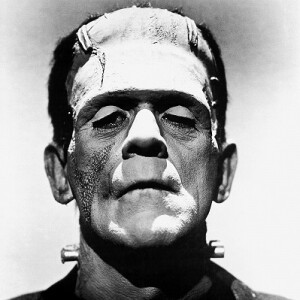
As Robert Walton and his ship attempted to find a route to the North Pole, they discovered on a small ice flow a dog sled with an exhausted passenger, a man named Viktor Frankenstein.
Mary Shelley’s 1818 novel Frankenstein or, the Modern Prometheus tells a cautionary story about technology. Using all the scientific learning and technology he could muster, Viktor Frankenstein literally and figuratively creates a monster—a monster he fears and who pursues him to the death.
Dr. Tiffany Schubert gave this introduction to Shelley’s novel to the Wyoming School of Catholic Thought as we considered The Ancient and Modern Challenges of Technology.
Aug 1, 2023
Aug 1, 2023
18 min
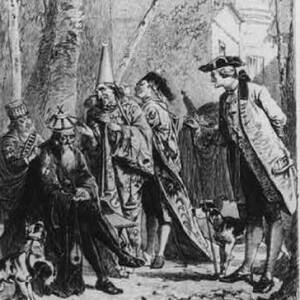
In addition to being an Anglican priest, Jonathan Swift had a special gift for satire. "Satire," he wrote “is a sort of glass wherein beholders do generally discover everybody’s face but their own; which is the chief reason for that kind reception it meets with in the world, and that so very few are offended with it.”
Writing amid the scientific and technological advancements of the early 1700s, Swift was less than convinced that the progress was actually progress and in Gulliver’s Travels he included a voyage to the flying island of Laputa where science and technology come under his satirical gaze.
Dr. Tiffany Schubert gave this introduction to Gulliver’s adventures on Laputa.
Jul 25, 2023
Jul 25, 2023
37 min
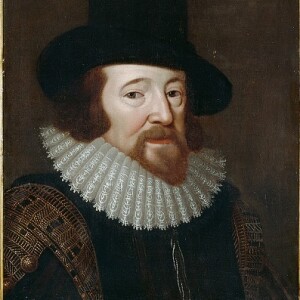
Francis Bacon famously noted that, “Knowledge is power.” And the knowledge of science that then leads to the knowledge of technology brings enormous power.
In his book The New Atlantis, published in 1627, the year after his death, Francis Bacon imagines being lost in the Pacific Ocean and landing in an unknown country, one filled with scientific and technological marvels.
Dr. Paul Giesting led the participants in the 2023 Wyoming School of Catholic Though into a discussion of Bacon’s work with this introduction. The text to The New Atlantis can be found here.
Jul 18, 2023
Jul 18, 2023
19 min
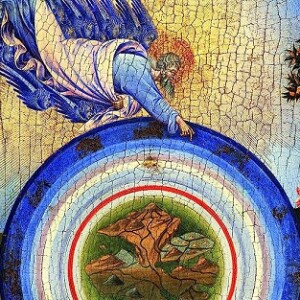
…[W]hatever is in motion must be put in motion by another,” wrote St. Thomas Aquinas at the beginning of his Summa Theologiae, “If that by which it is put in motion be itself put in motion, then this also must needs be put in motion by another, and that by another again. But this cannot go on to infinity, because then there would be no first mover, and, consequently, no other mover; seeing that subsequent movers move only inasmuch as they are put in motion by the first mover; as the staff moves only because it is put in motion by the hand. Therefore it is necessary to arrive at a first mover, put in motion by no other; and this everyone understands to be God.”
This proof of God’s existence is the first of five that Thomas presents at the beginning of the Summa. And while that seems simple and convincing to most of us, many scholars are certain that the proof is not at all convincing insofar as it relies on Medieval physics and cosmology.
In his new book, Nature and Nature’s God: The Scientific and Philosophical Validity of Aquinas’ Proof of an Unmoved Mover Wyoming Catholic College philosopher Dr. Daniel Shields argues that those scholars should take another look at Thomas’ argument.
Jul 11, 2023
Jul 11, 2023
48 min
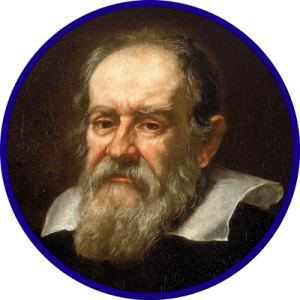
In the early 1990s—a mere thirty years ago— America Online was launched into cyberspace and the Hubble Telescope was launched into outer space. These have changed our lives. And it’s an odd parallel to two technological advancements from the Middle Ages—one from 1436 and another from 1608.
In 1436, German goldsmith Johannes Gutenberg invented a printing press with movable type. In 1608, an unknown person invented the telescope, an idea that spread as a result of printing and was quickly picked up by Galileo who built his own, studied the heavens, and had his revolutionary findings printed by printing press.
At the Wyoming School of Catholic Though this past June, adult learner listened to this introduction to Early Modern science by Dr. Paul Giesting.
Readings:
- C.S. Lewis, The Discarded Image, Chapter 1
- Johannes Trithemius, De laude scriptorum, extracts
- Francis Bacon, Novum organum, Aphorism 129 of Book I
- Galileo Galilei, Sidereus nuncius, abridged
- Johannes Kepler, Dioptrics extract from the preface
- Elizabeth Eisenstein, The Printing Revolution in Early Modern Europe, pages 206-212