
220.7K
Downloads
400
Episodes
Weekly conversations about the Liberal Arts and The Great Books with Wyoming Catholic College professors, board members,and guests.
Episodes
Jun 26, 2018
Jun 26, 2018
14 min
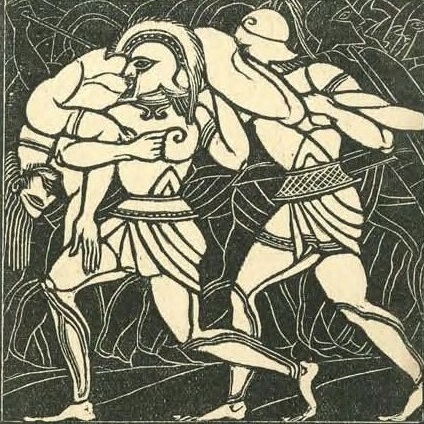
“Ah me, son of valiant Peleus;” said the messager to Achilles in book 18 of The Iliad, “you must hear from me the ghastly message of a thing I wish never had happened. Patroklos has fallen, and now they are fighting over his body which is naked. Hektor of the shining helm has taken his armor.”
As we began discussing courage at this year’s Wyoming School of Catholic Thought, we turned our attention to Achilleus, the paragon of courage. In book 18 of The Iliad, Achilles, who has refused to help the nearly-defeated Greeks, mourns the loss of his friend Paroklos and resolves to rejoin the battle. And he does that knowing that his death in battle is absolutely certainty once he avenges Patroklos death by killing Hecktor.
Dr. Glenn Arbery, president of Wyoming Catholic College, explains how Achilles’ decision and the shield and armor that are then designed for him, give us a picture of courage that becomes the baseline for all other depictions of this virtue.
Jun 19, 2018
Jun 19, 2018
13 min
This past week, Wyoming Catholic College hosted our annual Wyoming School of Catholic Thought here in Lander, Wyoming. Adult learners came from as far away as California, South Carolina, and Florida to consider the topic “The Paradox of Courage: Desire to Live, Readiness to Die.”
We read and discussed authors as diverse as Homer, Plato, St. Athanasius, St. Thomas Aquinas, Sophocles, the Bible, and T. S. Eliot, watched Sophie Scholl, a film about a brave young woman in Nazi Germany and the 1928 silent film “The Passion of Joan of Arc,” and left enough time for horseback riding, hiking, and many fruitful conversations about courage in the works we considered and in the world today.
The After Dinner Scholar in the next weeks will feature interviews and lectures from the Wyoming School of Catholic Thought. To introduce the topic, this week’s interview with Wyoming Catholic College president Dr. Glenn Arbery was recorded back in January and offers a broad overview of courage in philosophy and literature.
Jun 12, 2018
Jun 12, 2018
13 min
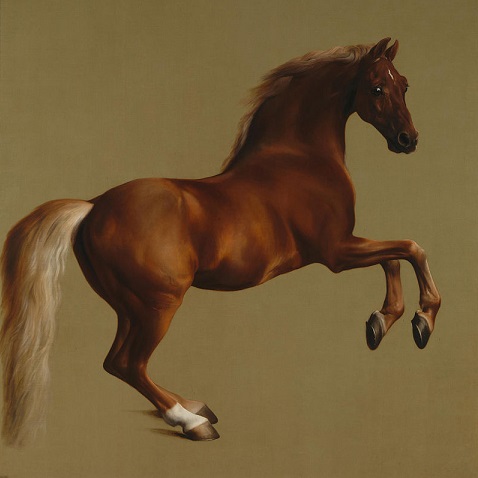
Winston Churchill once remarked, "No hour of life is wasted that is spent in the saddle."
Occasionally we find people who think of Wyoming Catholic College “that school with the backpacks and horses.” And we are very careful to remind such people that we are also the school where students speak Latin, read Plato, Aristotle, and St. Thomas Aquinas, and work through the mathematics of Euclid, Isaac Newton, and Einstein. Our academic program is challenging and our standards are high.
That being said, we do, in fact, have horses and every student learns to care for and ride a horse.
At the center of our equestrian program is Lorine Sheehan, a member of the Wyoming Catholic College class of 2014 and an accomplished horsewoman. Mrs. Sheehan is our guest on The After Dinner Scholar.
Jun 5, 2018
Jun 5, 2018
15 min
In the fall of 1971—a couple of months before the U. S. Supreme Court’s decision in Roe v. Wade—the journal Philosophy and Public Affairs published an article by philosopher Judith Jarvis Thompson entitled “A Defense of Abortion.”
Rather than being shrill and angry, Thompson’s defense of abortion is carefully reasoned and nuanced, which makes it a wonderful teaching tool and a wonderful way to convince students of the need to study philosophy.
Wyoming Catholic College philosopher, Dr. Michael Bolin is entirely pro-life. Yet he has been teaching “A Defense of Abortion” for years at PEAK, the college’s summer program for high school juniors and seniors. Dr. Bolin is our guest this week on The After Dinner Scholar.

May 29, 2018
May 29, 2018
13 min
The number of integers (1, 2, 3, 4, and so on) is infinite. And oddly enough so is the number of even integers (2, 4, 6, 8, 10, and beyond). Meaning that the number of even integers is equivelent to the number of all integers, both odd and even? Yes. Welcome to infinity.
Each summer Wyoming Catholic College runs what we call our PEAK program for high school juniors and seniors. In it we give them a taste of life at the college including backpacking, horseback riding, Catholic worship and devotion, and classes complete with homework and tests. Not only do high school students enjoy the two weeks of PEAK, but they walk away with a pretty good idea of what it would be like to come to college here at Wyoming Catholic. Many decide that it would be wonderful and join us as freshmen.
This year mathematician Dr. Scott Olsson will be teaching a course at PEAK on infinity. And I asked Dr. Olsson to join us on The After Dinner Scholar with a finite preview of infinity.
May 22, 2018
May 22, 2018
14 min
Wyoming Catholic College graduation was Saturday, May 12. It came with all the pomp and circumstance, academic regalia, and excitement that you might expect. Our speaker was author and scholar Joseph Pearce who was our guest on last week’s After Dinner Scholar.
The evening before the big event, however, was a smaller, more intimate gathering of graduates and their families along with college faculty and staff. That night, at the President’s Dinner, college president Dr. Glenn Arbery reflected on the seniors, their four years of liberal arts education, and their participation in the great tradition of the Christian West.
Dr. Arbery is our guest this week on The After Dinner Scholar.
May 15, 2018
May 15, 2018
12 min
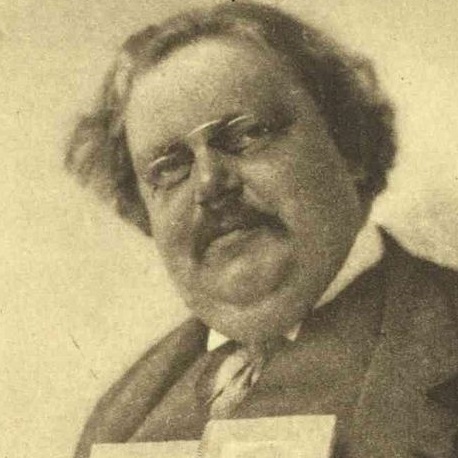
The Wyoming Catholic College Class of 2018 graduated on Saturday, May 12. Their graduation speaker was author and scholar Joseph Pearce.
Pearce has authored more than 24 books including The Quest for Shakespeare, Tolkien: Man and Myth, The Unmasking of Oscar Wilde, C. S. Lewis and The Catholic Church, Literary Converts, Wisdom and Innocence: A Life of G.K. Chesterton, Solzhenitsyn: A Soul in Exile and Old Thunder: A Life of Hilaire Belloc.
Pearce is a man of books and books figure prominently into his conversion and his life. Joseph Pearce is our guest this week on The After Dinner Scholar.
May 8, 2018
May 8, 2018
15 min
In the second century AD, St. Irenaeus wrote, “We have known the method of our salvation by no other means than those by whom the gospel came to us; which gospel they truly preached; but afterward, by the will of God, they delivered to us in the Scriptures, to be for the future the foundation and pillar of our faith.”
Of course, just how the Scriptures serve as “the foundation and pillar of our faith” is a complicated question. Is it sufficient on its own as most of our Protestant friends believe? Or does it require the hand of the Church and of tradition lest we be led astray? Is interpretation open-ended, subject to the ideas and spirit of every age? Or is there a right and a wrong way (or assorted wrong ways) of understanding the Scriptures?
Professor Kyle Washut has been considering those kinds of questions with our freshmen looking at, among other texts, De Verbum from the Second Vatican Council. Professor Washut is our guest this week on The After Dinner Scholar.
May 1, 2018
May 1, 2018
12 min
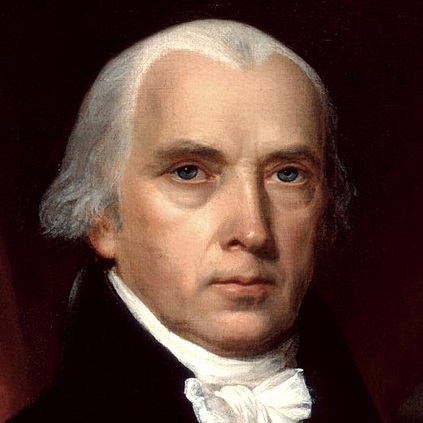
October 19, 1781: British General Charles Cornwallis surrendered to General George Washington at Yorktown. The War for Independence was over. Then came the tricky part. It’s one thing for a nation to achieve independence. It’s quite another to have to govern that nation once you’re on your own.
During the Revolutionary War, governing American was catch as catch can. Congress did its best under the Articles of Confederation--our first constitution--to raise an army, pay an army, and conduct foreign policy. Once the war was over, a whole host of problems arose.
That led to drafting the Constitution and the ratification debate between the Federalists and the Anti-Federalists. Dr. Jim Tonkowich provides an overview of that debate in this week's After Dinner Scholar.

Apr 24, 2018
Apr 24, 2018
15 min
Wyoming, in addition to being a destination for skiing, hiking, backpacking, and rock climbing, has some of the best hunting and fishing in the country. Unlike skiing, backpacking and the like, hunting and fishing involve taking an animal’s life. The trout, salmon, pheasant, deer, elk, or pronghorn we hunt dies.
How exactly does that fit into Catholic theology and faith? Some might answer, “Not at all.” And yet, with the exception of dairy, regardless of what we eat—be it venison chops or pork chops—something always dies so that we can live. It’s a fact of life from which we typically buffer ourselves, purchasing meat on Styrofoam trays sealed with plastic wrap with little hint of the animal from which it came. But could it be the direct encounter with animals and death and life is good and right?
To discuss that and other matters related to life, God, creation, and human dominion over creation, we’re joined by Dr. Jeremy Holmes, theologian and hunter.