

220.7K
Downloads
400
Episodes
Weekly conversations about the Liberal Arts and The Great Books with Wyoming Catholic College professors, board members,and guests.
Episodes
Apr 17, 2018
Apr 17, 2018
16 min
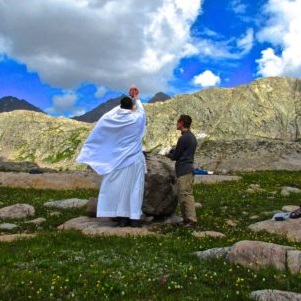
Throughout the Scriptures men and women encounter God in the wilderness and the mountains. Think of Abraham traveling through the wilderness to that land God would show him. Think of the people of Israel in the desert with Moses receiving the Law on Mount Sinai. People swarmed out to see John the Baptist in the wilderness. Jesus spent forty days and forty nights in the wilderness. St. Paul after his conversion “went away into Arabia.”
This week at Wyoming Catholic College is Outdoor Week. Our students are in the wilderness encountering God (we trust) as they rock climb, go canyoneering, mountain bike, canoe, raft, and backpack.
Dr. Tom Zimmer runs the outdoor program at the college and, beyond the college, directs COR—Catholic Outdoor Renewal. COR’s mission is: “To provide transformative wilderness experiences which renew the hearts (cor being Latin for heart) of those who participate.”
Dr. Zimmer is out guest this week on The After Dinner Scholar.
Apr 10, 2018
Apr 10, 2018
15 min
The Edict of Milan signed by Emperors Constantine and Licinius in AD 313 granted the Roman people freedom to choose any religion they wished including previously outlawed Christianity. Then in 380, Theodosius outlawed everything except the Christianity.
And so it was for much of the sixteen-hundred years since Theodosius. Catholic Christianity was the state religion of every state in Europe and even after the rise of Protestantism, the formulation cuius regio, eius religio—“Whose Realm, his religion”—was the order of the day.
Religious freedom was still a new and novel idea when it became part of the US Constitution. And as the idea spread, it was also a controversial idea.
Dr. Kent Lasnoski has been leading Wyoming Catholic College seniors into the conversations about religious freedom in the Catholic Church and is our guest this week on The After Dinner Scholar.
Suggested Readings:
- Immortale Dei - Pope Leo XIII
- Libertas - Pope Leo XIII
- Dignitatis Humanae - Second Vatican Council
Apr 3, 2018
Apr 3, 2018
16 min
Dante’s descent into Hell in Inferno, begins on Good Friday in the year 1300. He sojourns in that place of pain, despair, and noise emerging appropriately at dawn on Easter. Then in the days following Easter, he climbs Mount Purgatory and is swept up to the heights of Heaven.
Dante’s Comedy tells an amazing tale, but perhaps just the thought of tackling Dante is overwhelming. Maybe you’ve tried to read it or thumbed through only to quit discouraged. Or perhaps you read all the words, but with little real satisfaction.
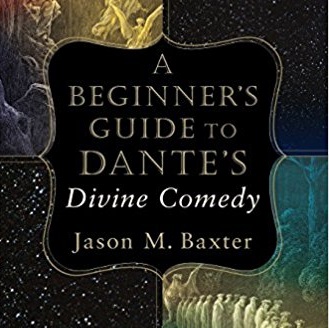
What you need is a guide and Wyoming Catholic College professor Dr. Jason Baxter, after guiding many of our students through Dante has a brand new book aptly titled, A Beginner’s Guide to Dante’s Comedy. To tell us about the book, Dr. Baxter is our guest on this edition of The After Dinner Scholar.
Mar 26, 2018
Mar 26, 2018
14 min
In his sermon entitled “My Night Knows No Darkness,” twentieth century theologian Fr. Karl Rahner asked about Lent, “How is such a time relevant for us today with our many needs, our hopelessness with regard to this world, our bitter hearts, our sense that we would be willing to fast as long as it did not mean going hungry?”
In the sadness of modern life, why add more sadness and sober contemplation about our lives? What good does it do us? Why not jump to the joy of Easter and leave it at that?
Wyoming Catholic College Academic Dean and Associate Professor of Humanities and Philosophy Dr. Thaddeus Kozinski has been reflecting on Rahner’s sermon during this Lent and shares with us some insights during this Holy Week next on The After Dinner Scholar.
Fr. Rahner's sermon "My Night Knows No Darkness" (available here) will be among the readings at The Wyoming School of Catholic Thought, June 10-14 in Lander, Wyoming. Sign up today.
Mar 20, 2018
Mar 20, 2018
14 min
Faith and science, we've been told, are at war so choose your side. Will you be a modern man or woman or will you hang onto outdated and disproved dogmas?
And too often Christian young people believe in the war and choose to side with science.
But the faith versus science dichotomy, however, is as false as it is overblown and pernicious.
Wyoming Catholic College Associate Professor of Philosophy Dr. Michael Bolin works through the arguments each year with our students as they consider the question of evolution. Dr. Bolin is our guest this week on The After Dinner Scholar.
Mar 13, 2018
Mar 13, 2018
16 min
“I begin this book, on the humanities,” writes Wyoming Catholic College Associate Professor of Fine Arts and Humanities, Dr. Jason Baxter, “with a description of travel, because I think the experience of being immersed in a world of surprises, like I was in Ischia, and the experience of reading a ‘great book’… is fundamentally analogous.”
Dr. Baxter goes on to write that his just-released book Falling Inward: Humanities in the Age of Technology is an answer to the question, “How is the profound sense of travel like the experience of reading?” Both are fundamentally the experience he calls “falling inward.”
To discuss his book and the meaning of its title, Dr. Baxter is our guest this week on The After Dinner Scholar.
Order Dr. Baxter's book, Falling Inward from Cluny Media or Amazon.
Mar 6, 2018
Mar 6, 2018
13 min
“The world is a book,” wrote St. Augustine of Hippo some 1,600 years ago, “and those who do not travel read only one page.”
The idea of reading page after page of the book of the world is not unique to St. Augustine. We are all homo viator, human travelers both in the sense that we are pilgrims in earth moving toward our eternal homes and in the sense that as embodied beings, we are naturally drawn to explore the world of places that we inhabit. Something in us wants to know what’s over the next hill and over the next hill and beyond that river.
Wyoming Catholic College senior Elizabeth Meluch certainly had a sense of that when she began writing her thesis and the accompanying oration she delivered last week on the subject of travel. Miss Meluch is our guest this week on The After Dinner Scholar.
Feb 27, 2018
Feb 27, 2018
14 min
In order to graduate from Wyoming Catholic College, each student writes a thesis during the fall semester of senior year and then in the winter presents the topic of the thesis as a thirty-minute lecture, taking questions from the audience for another thirty minutes. The audience includes their classmates and other students, parents who arrive for the week or are there via Skype or Facetime. Oh, and there’s a panel of three faculty members armed with the first round of questions.
This week and next, The After Dinner Scholar will feature two of our seniors fresh from their orations.
This week, our guest is Jason Kirstein, who wrote his senior thesis on "The Four Causes of Obedience: A Love that Trieth the Path to the Terram Visionis [the Land of Vision]."
Feb 20, 2018
Feb 20, 2018
15 min
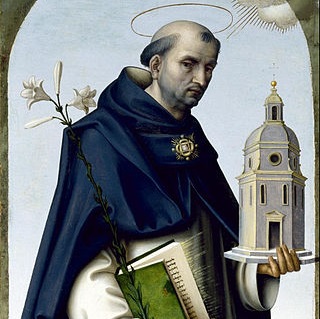
St. Thomas Aquinas is known primarily as a great thinker. And indeed his works still under gird a Catholic understanding of God and the world. But for St. Thomas, thinking, teaching and writing about Sacred Scripture, theology, and philosophy were never ends in themselves. His academic work—and indeed from his point of view all his work and rest—served a higher purpose.
That higher purpose animates St. Thomas' short work, “On the Perfection of the Spiritual Life.”
“Since certain persons, knowing nothing about perfection,” he began, “have presumed to speak follies concerning the state of perfection, our purpose is to treat of perfection: what it is to be perfect; how perfection is acquired; what is the state of perfection; and what befits those who take up this state.”
Theologian Dr. Kent Lasnoski has been working through “On the Perfection of the Spiritual Life with our Wyoming Catholic College seniors. Dr. Lasnoski is this week’s guest on The After Dinner Scholar.
Feb 13, 2018
Feb 13, 2018
1hr 8 min
Each year Wyoming Catholic College sponsors our Lecture Series for all students (attendance is required), faculty, staff, and our neighbors in Lander and beyond.
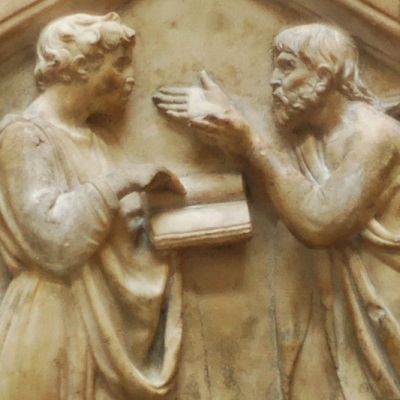
On February 2, The Feast of the Presentation, Dr. Thaddeus Kozinski, our Academic Dean and Associate Professor of Humanities and Philosophy delivered a lecture entitled, “Is Reading Plato Necessary for Salvation?” and we’re delighted to offer it to you in its entirety as an After Dinner Scholar podcast.