

220.3K
Downloads
400
Episodes
Weekly conversations about the Liberal Arts and The Great Books with Wyoming Catholic College professors, board members,and guests.
Episodes
Apr 26, 2022
Apr 26, 2022
23 min
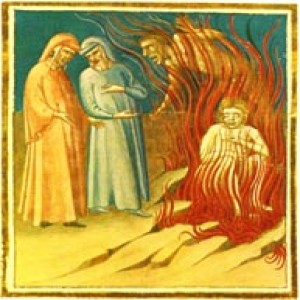
The eighth circle of Dante’s Hell are the Malabolge, the evil ditches. In the eighth evil ditch false counselors are punished, trapped in flames. Dante the pilgrim asks Virgil his guide about one flame in particular Virgil answers, "Within this flame find torment Ulysses and Diomedes.”
Ulysses is also known as Odysseus who, after conquering Troy, wandered ten years trying to get home to his kingdom of Ithaca, to his father, Laertes, to his beloved wife, Penelope, and to their son Telemachus. After he finally returns to all that was dear to him, Dante tells us, Odysseus succumbed to wanderlust "to gain experience of the world and learn about man’s vices, and his worth."
The voyage did not end well. Death and Hell take him. But did he deserve to be in Hell? Was his sin really as great as all that?
Prof. Adam Cooper has been teaching Dante helps us understand.

Feb 15, 2022
Feb 15, 2022
15 min
Since at least 1891 when Pope Leo XIII issued the encyclical Rerum Novarum, the Catholic Church has debated the relationship between capital and labor. It has been and continues to be a complex and somewhat contentious one.
Not at all deterred by that, Wyoming Catholic College senior, Mr. Thomas Sponseller delivered a fine senior oration two weeks ago on the topic “Catholics in a Capitalist World: Understanding Capitalism with Catholic Social Teaching.”
Feb 8, 2022
Feb 8, 2022
13 min
One of the highlights of the academic year here at Wyoming Catholic College is Senior Oration Week. During the fall semester, each senior prepares a thesis, a major research paper on a topic of his or her choosing. Then early in the spring semester, each senior presents the thesis as a half-hour oration with an additional half hour for questions—first from a faculty panel and then from the audience.
Last week was Oration Week 2022 and our seniors did not disappoint.
Miss MaryAnne Speiss used her thesis and oration to explore a question that had been on her mind throughout her four years at Wyoming Catholic College. Her title was, “Ancient ‘Goodness’—Does God Hate It, Tolerate It, or Demand It?: Nietzsche and Lewis on Good, Evil, and Spirited Christianity.”
Jan 18, 2022
Jan 18, 2022
14 min
Not long after Wyoming Catholic College began, students organized Cowboys for Life in order to speak for the protection of the unborn. Cowboys for Life has organized trips to Marches for Life in Denver and San Francisco. They spent hours praying at the corner of Second and Main here in Lander during 40 Days for Life. And on November 30, they organized an all-night prayer vigil on the eve of the oral arguments before the Supreme Court about Dobbs v. Jackson Women's Health Organization, the case that may be the end of Roe v. Wade.
The current president of Cowboys for Life is Wyoming Catholic College junior Jill Cook who begins by telling us how she became active in the pro-life movement.
Nov 2, 2021
Nov 2, 2021
17 min
Because life is brief
and many are the pains
which, living and struggling, everyone sustains
let us follow our desires,
passing and consuming the years
because whoever deprives himself of pleasure,
to live with anguish and with worries
doesn’t know the tricks
of the world or by what ills
and by what strange happenings
all mortals are almost overwhelmed.
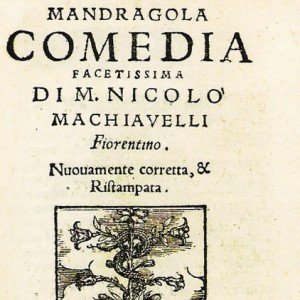
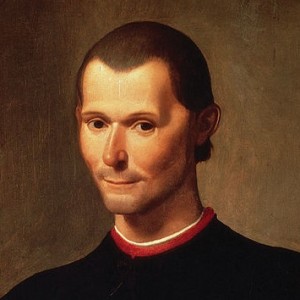
“Because life is brief…let us follow our desires” has a contemporary ring to it. Yet those words were penned in 1512 by the playwright and philosopher Niccolò Machiavelli in his play La Mandragola, The Mandrake.
This semester, Dr. Tiffany Schubert is teaching Machiavelli’s play to Wyoming Catholic College juniors and it has led to amazing classroom conversations. Why would that be?
Jan 21, 2020
Jan 21, 2020
15 min
Soon after joining the U.S. Supreme Court in 1970, Associate Justice Harry Blackmun received an unwelcome surprise. Chief Justice Warren Burger put him in charge of writing the majority opinion in Roe v. Wade the ruling legalizing abortion across the United States.
Prior to writing that opinion, Blackmun thought little about abortion. But the opinion he wrote plus the enormous criticism the opinion and he personally received turned Blackmun into a strident exponent of abortion insisting that a woman’s right to choose to abort her child is a fundamental right.
Sue Ellen Browder majored in journalism and ended up working for Cosmopolitan magazine. She tells her story in her most recent book from Ignatius Press, Subverted: How I Helped the Sexual Revolution Hijack the Women’s Movement. The research she did for that book also yielded the story of Harry Blackmun and Roe.
Oct 22, 2019
Oct 22, 2019
12 min
“Because life is brief…let us follow our desires” has a rather contemporary ring to it. Yet those words were penned in 1512 by the playwright, philosopher, and politico Niccolò Machiavelli in his play La Mandragola, The Mandrake.
Machiavelli is, of course, best known for his book The Prince that gives advice on how to rule. That book contains observations such as, “All ethical and moral values are arbitrary artifacts from the cultures that set them forth. All political and military greatness is derived from ignoring them.”
La Mandragola is, in a sense that kind of thinking turned into a play and Dr. Kent Lasnoski, our guest this week, has been teaching that play to our students with amazing results.
Aug 6, 2019
Aug 6, 2019
43 min
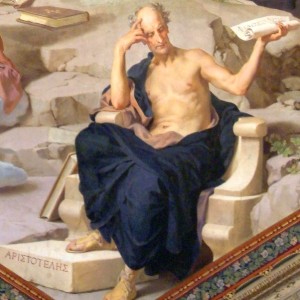
How important are friends? Aristotle observed that no one would choose to live without friends even if he or she had all the other good things of life.
Aristotle also observed that there are different kinds of friendship and that no all friendships are what he called “complete friendships.” Some are friendships of utility—business partners, vendors, baristas. Others are friendships of pleasure—fishing buddies, tennis partners, or even lovers. Not that all such friendships are necessarily bad, but that all are incomplete.
This is the last of our summer podcast series from the 2019 Wyoming School of Catholic Thought where we considered “No Greater Gift: Friendship from The Iliad to Facebook.” In it Dr. Pavlos Papadopoulos led us through Aristotle’s discussion of friendship in The Nicomachean Ethics books 8 and 9.
Jul 23, 2019
Jul 23, 2019
43 min
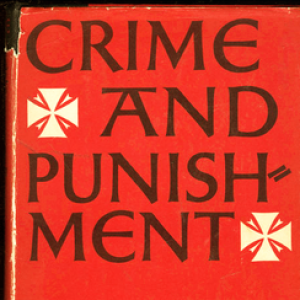
“On an exceptionally hot evening early in July a young man came out of the garret in which he lodged in S. Place and walked slowly, as though in hesitation, towards K. bridge.
“He had successfully avoided meeting his landlady on the staircase. His garret was under the roof of a high, five-storied house and was more like a cupboard than a room. The landlady who provided him with garret, dinners, and attendance, lived on the floor below, and every time he went out he was obliged to pass her kitchen, the door of which invariably stood open. And each time he passed, the young man had a sick, frightened feeling, which made him scowl and feel ashamed. He was hopelessly in debt to his landlady, and was afraid of meeting her.”
Thus begins Fyodor Dostoyevsky’s novel Crime and Punishment. "He" in this case is Rodion Romanovich Raskolnikov, a college drop-out living in abject poverty in 19th century St. Petersburg, Russia. Consumed with misery, anger, and a strange sense of self-importance, Raskolnikov will in the course of the novel commit a double murder plunging him even deeper into despair.
Along the way, he meets Sonia Marmeladov. She is the child of a hopeless drunk who, in order to support her father, his second wife, and his step-children, sells the only thing she possesses: herself in prostitution.
How the friendship between harlot and the murderer becomes the source of redemption is the topic of the novel and was the topic Dr. Virginia Arbery addressed at the 2019 Wyoming School of Catholic Thought. This is what she had to say.
Jul 16, 2019
Jul 16, 2019
55 min
“There is nothing on this earth more to be prized than true friendship,” wrote St. Thomas Aquinas. In fact, he went on, “Friendship is the source of the greatest pleasures, and without friends even the most agreeable pursuits become tedious.”
Jesus made it clear that while the first and greatest commandment is to love God, the second is love for neighbor. And “neighbor” for Jesus even extends to enemies.
In the second part of the second part of the Summa Theologiae, St. Thomas Aquinas explored the question of love for God, neighbors, enemies, and friends.
At The Wyoming School of Catholic Thought, theologian Dr. Jeremy Holmes led us through Thomas’ thinking. Here, in part, is what he said.
Texts from St. Thomas Aquinas:
- Summa Theologae II.II, Question 23, Article 1; Question 25, Article 1; Question 26, Article 3
- Disputed Questions on the Virtues, Question 2, Article 2