
220.7K
Downloads
400
Episodes
Weekly conversations about the Liberal Arts and The Great Books with Wyoming Catholic College professors, board members,and guests.
Episodes
Jul 19, 2022
Jul 19, 2022
36 min
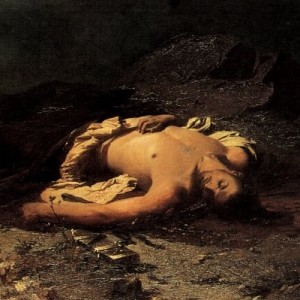
Antigone’s brother Eteocles fought for Thebes and King Creon. Her other brother, Polyneices, fought against Creon and thus against Thebes. In battle they killed each other. Creon buried Eteocles with full military honor. But regarding Polyneices, has ordered, “No one shall bury him, no one mourn for him, / But his body must lie in the fields, a sweet treasure / For carrion birds to find as they search for food.”
His sister, Antigone, won’t stand for it.
Sophocles’ tragedy, “Antigone” was one of the readings as the 2022 Wyoming School of Catholic Thought considered “Mortality and Eternity.” In the play Antigone risks and loses her life over the filial duty of burying the dead.
Before we broke up into seminar groups to discuss the play, Prof. Adam Cooper gave us this introduction.
Jul 12, 2022
Jul 12, 2022
23 min
I the Preacher have been king over Israel in Jerusalem. And I applied my mind to seek and to search out by wisdom all that is done under heaven; it is an unhappy business that God has given to the sons of men to be busy with. I have seen everything that is done under the sun; and behold, all is vanity and a striving after wind.
Those words are from the Old Testament book of Ecclesiastes. Are they the thoughts of a bitter cynic? Of a cranky, world-weary old man? Or encouraging words of wisdom?
When Dr. Jim Tonkowich introduced the book at the 2022 Wyoming School of Catholic Thought, he argued for the latter: Ecclesiastes contains encouraging words of wisdom, words our culture, so self-focused and materialistic, so forgetful of death, desperately needs to hear.
Jul 5, 2022
Jul 5, 2022
43 min
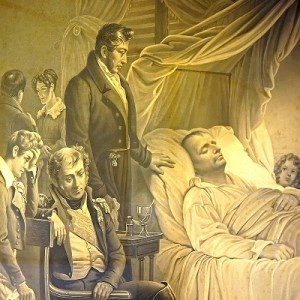
In the big building of the law courts, during a break in hearing the case of the Melvinskys, the members and the prosecutor met in Ivan Yegorovich Shehek's office, and the conversation turned to the famous Krasovsky case. Fyodor Vassilievich became heated demonstrating non-jurisdiction, Ivan Yegorovich stood his ground; as for Pyotr Ivanovich, not having entered into the argument in the beginning, he took no part in it and was looking through the just-delivered [newspaper].
“Gentlemen,” he said, “Ivan Ilyich is dead!”
Thus begins Leo Tolstoy’s 1886 novella, The Death of Ivan Ilych, the first reading for the 2022 Wyoming School of Catholic Thought. It’s intriguing that the story begins with Ivan Ilych’s death, recounting his life and his dying as a flashback after we hear of his funeral.
At the Wyoming School, Wyoming Catholic President, Dr. Glenn Arbery introduced Tolstoy’s novella this way.
Jun 28, 2022
Jun 28, 2022
21 min
“Teach us to number out days,” sang the psalmist, “that we may gain a heart of wisdom.”
This past June 12-17, the 2022 Wyoming School of Catholic Thought convened here in Lander. Adult learners came from California, Texas, Louisiana, New York, Pennsylvania, Wyoming, and elsewhere to study great texts on the theme “Mortality and Eternity.”
Our Wyoming Catholic College faculty led the sessions comprised of a short lecture introducing the reading followed by seminars.
This summer, The After-Dinner Scholar will bring you those lectures. And while they are helpful on their own, they will also serve as an introduction to your own study of the texts in the curriculum.
We began Sunday, June 12 with an after-dinner lecture to introduce the week. That night Dr. Jim Tonkowich spoke about Psalm 90.
Jun 21, 2022
Jun 21, 2022
13 min
NUNC, Sancte, nobis Spiritus,
unum Patri cum Filio,
dignare promptus ingeri
nostro refusus pectori.Now, O Holy Spirit (given) for us
One with the Father (and) the Son
condescend to enter [us] at once
(you) having been poured into our breasts
Wyoming Catholic College students study Latin during their freshman and sophomore years. From there they move to two years of Latin reading groups. One of the groups this last semester read Latin hymns including Nunc Sancte nobis Spiritus.
Prof. Eugene Hamilton—better known simply as Magister—led the reading group along with Dr. Travis Dziad. Prof. Hamilton is our guest on this podcast.
Jun 14, 2022
Jun 14, 2022
22 min
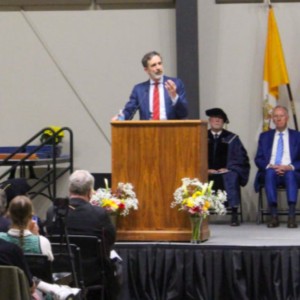
The Wyoming Catholic College seniors who graduated this past May 23, all took the same courses, read the same books, and received a Batchelor of Arts in Liberal Arts. What does that mean and why does it make a difference?
Our graduation speaker was Dr. R. R. Reno. Dr. Reno, the editor of the journal First Things and author of numerous books, is a keen and well-read observer of our modern culture and politics. Here's what he had to say to the graduates, parents, and the college community about the world, the future, and the liberal arts.
Jun 7, 2022
Jun 7, 2022
22 min
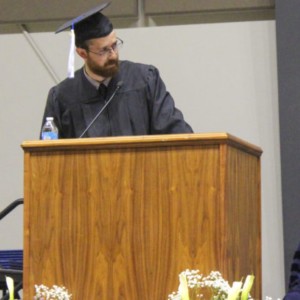
Each year the faculty of Wyoming Catholic College asks the senior class to select one of their number to speak for the class at graduation. The Class of 2022 chose Mr. Andrew Russell. The result was quite remarkable. Andrew's presence, content, delivery, and vision reminded his listeners of the mission of Wyoming Catholic College and how, to a great extent, we are fulfilling that mission.
May 31, 2022
May 31, 2022
22 min
The night before Wyoming Catholic College's graduation exercises, we celebrate our senior with a formal dinner, The President's Dinner, which includes seniors, their families and friends, as well as college faculty and staff. At the dinner, the college president addresses the seniors for one last time. President Glenn Arbery had this to say to the Class of 2022.

May 24, 2022
May 24, 2022
17 min
O last of Rome, among small-minded citizens,
The bickering children of your mother’s house,
Your gaze was calm and grave and kind
As is the glowing lamp
Upon the holy ikon’s deep-set brow.
Those lines are from the latest issue of the Wyoming Catholic College publication Integritas. They are the beginning of a poem called “Ode to Constantine XI” by Prof. Adam Cooper. While this podcast has featured any number of conversations about poem, it is a rare treat to feature a poem along with the poet.
To read "Ode to Constantine XI in Integritas click this link.
May 17, 2022
May 17, 2022
14 min
1. A point is that of which there is no part.
2. And a line is a length without breadth.
3. And the extremities of a line are points.
4. A straight-line is (any) one which lies evenly with points on itself.
5. And a surface is that which has length and breadth only.
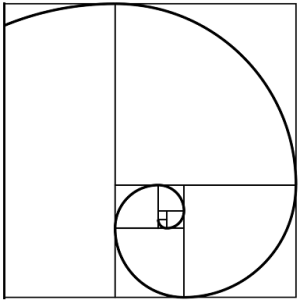
Those five definitions are the first five of twenty-three that form the introduction to Euclid’s Elements. They’re the things our second semester freshmen must know before beginning Proposition #1, the start of a mathematical journey that will last through fall semester sophomore year.
Dr. Henry Zepeda, who regularly teaches Euclid, discusses this seminal mathematician and The Elements before commenting on Euclid’s understanding of proportions.